Final Photography
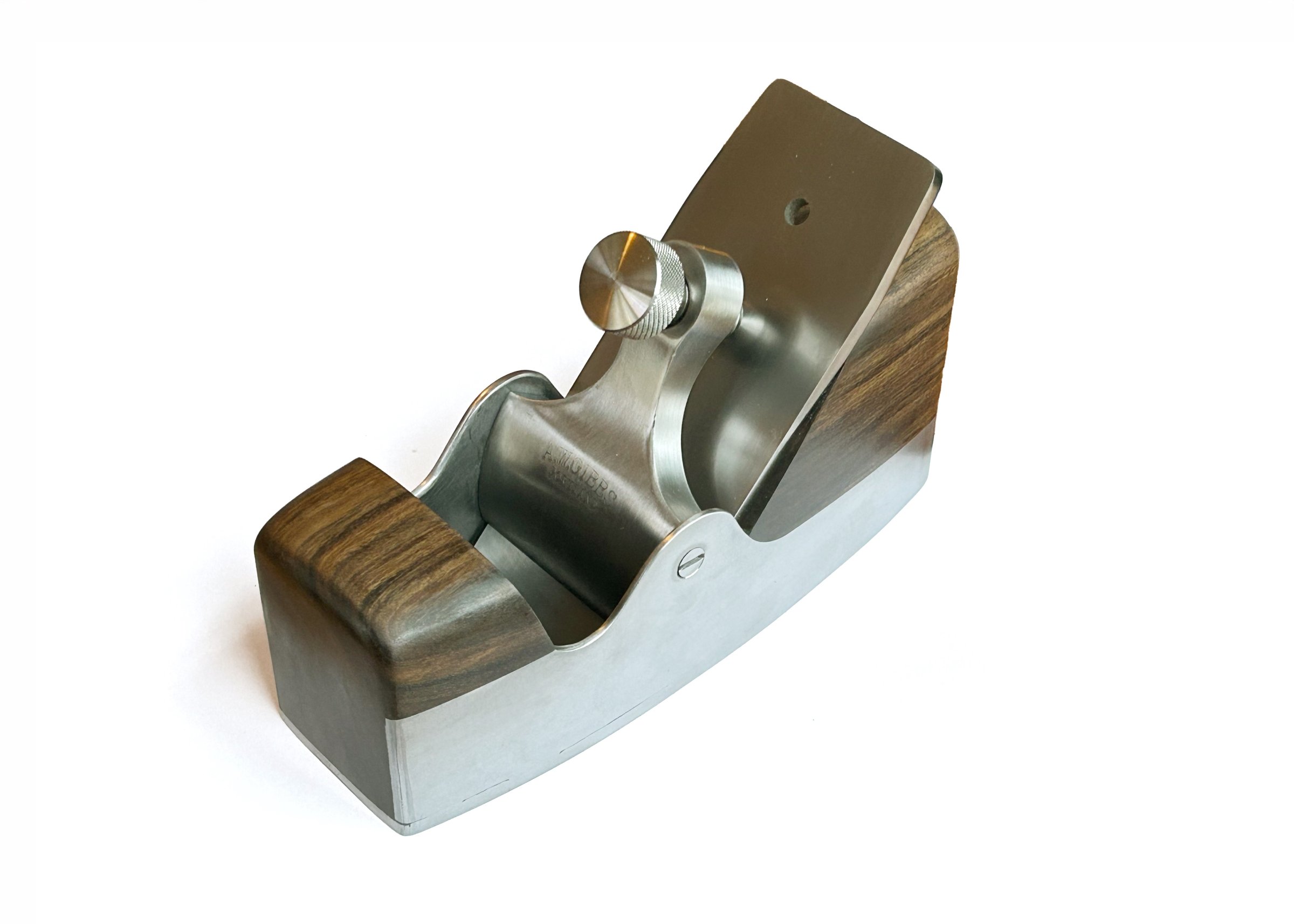
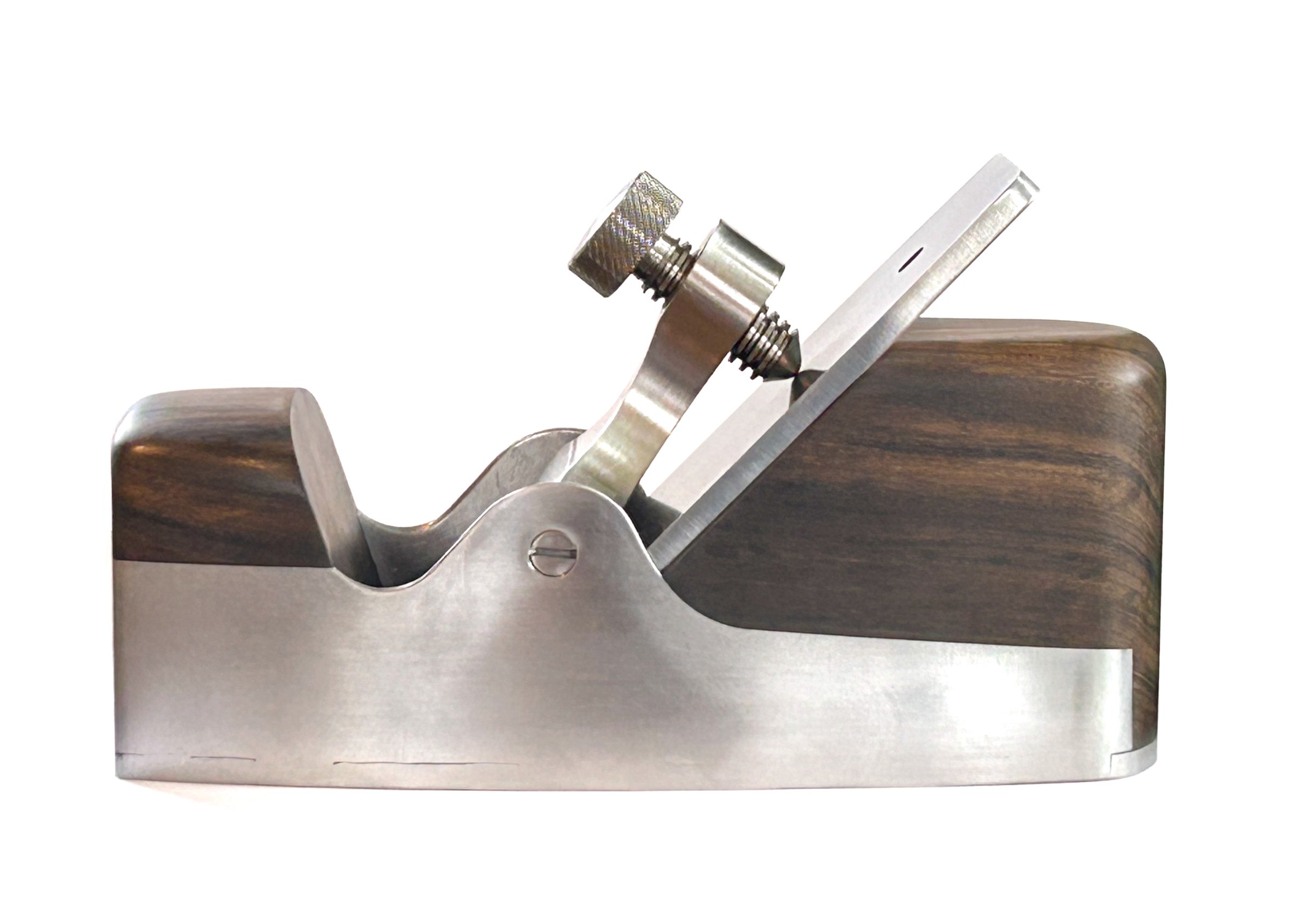
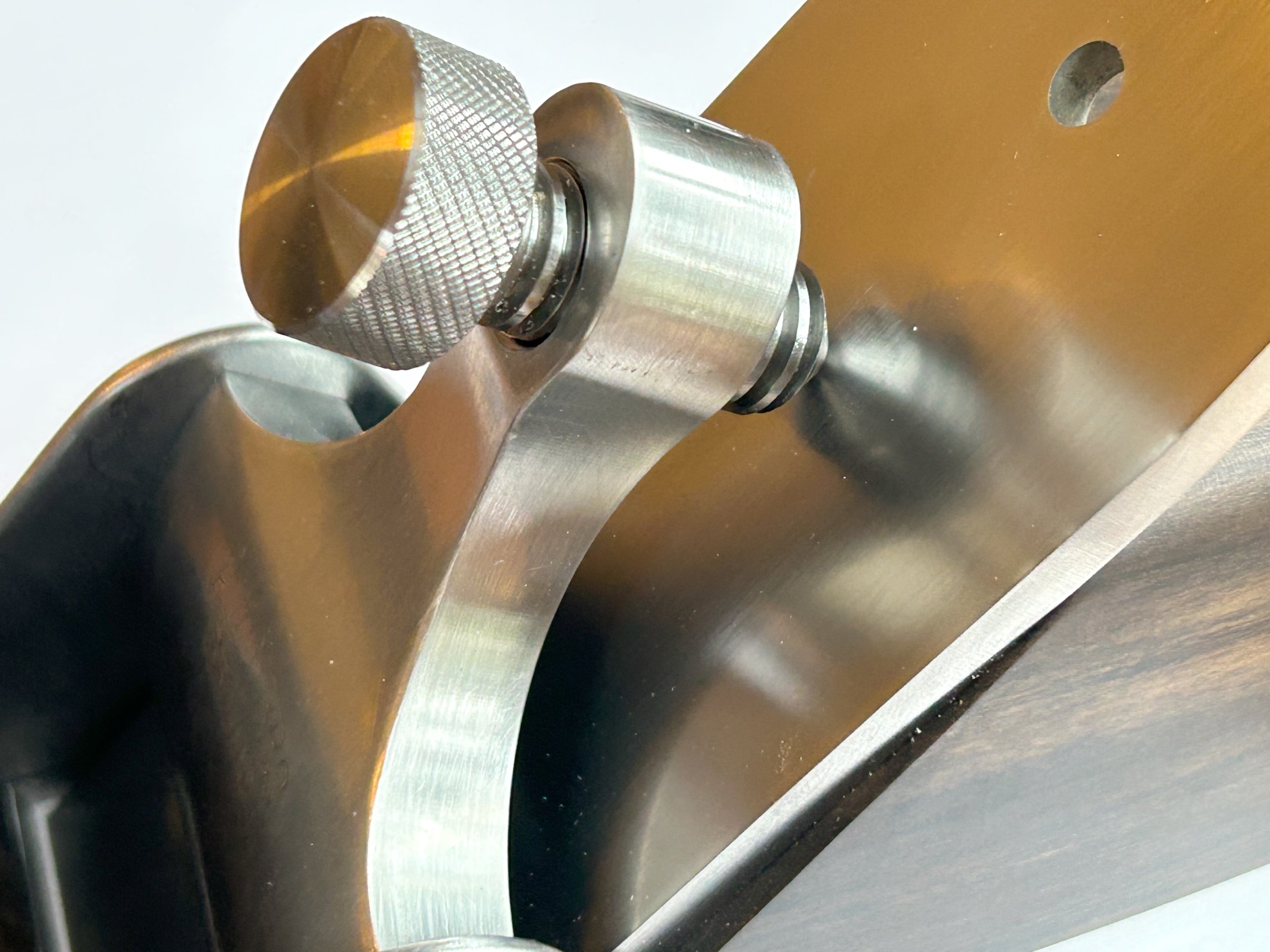
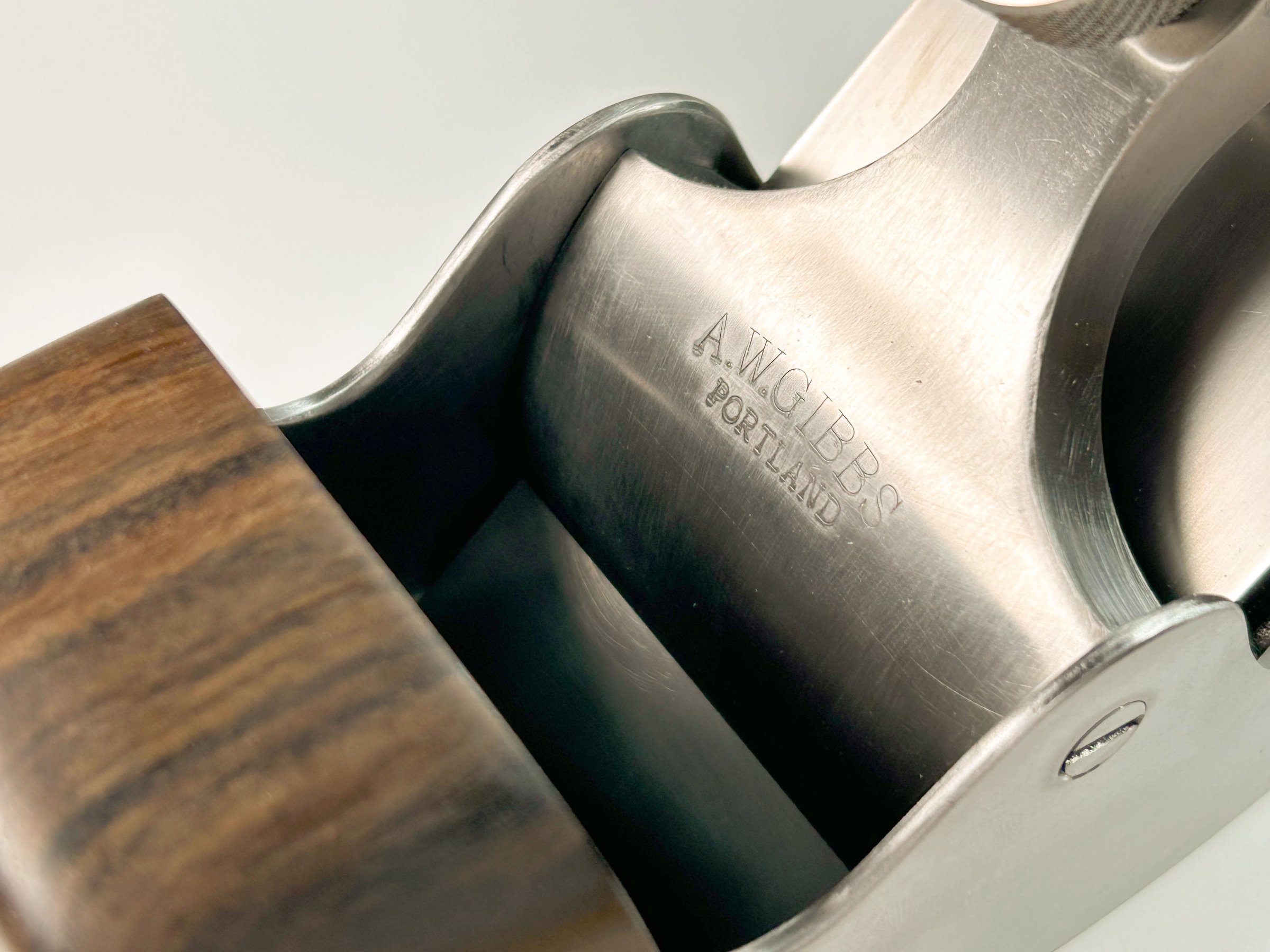
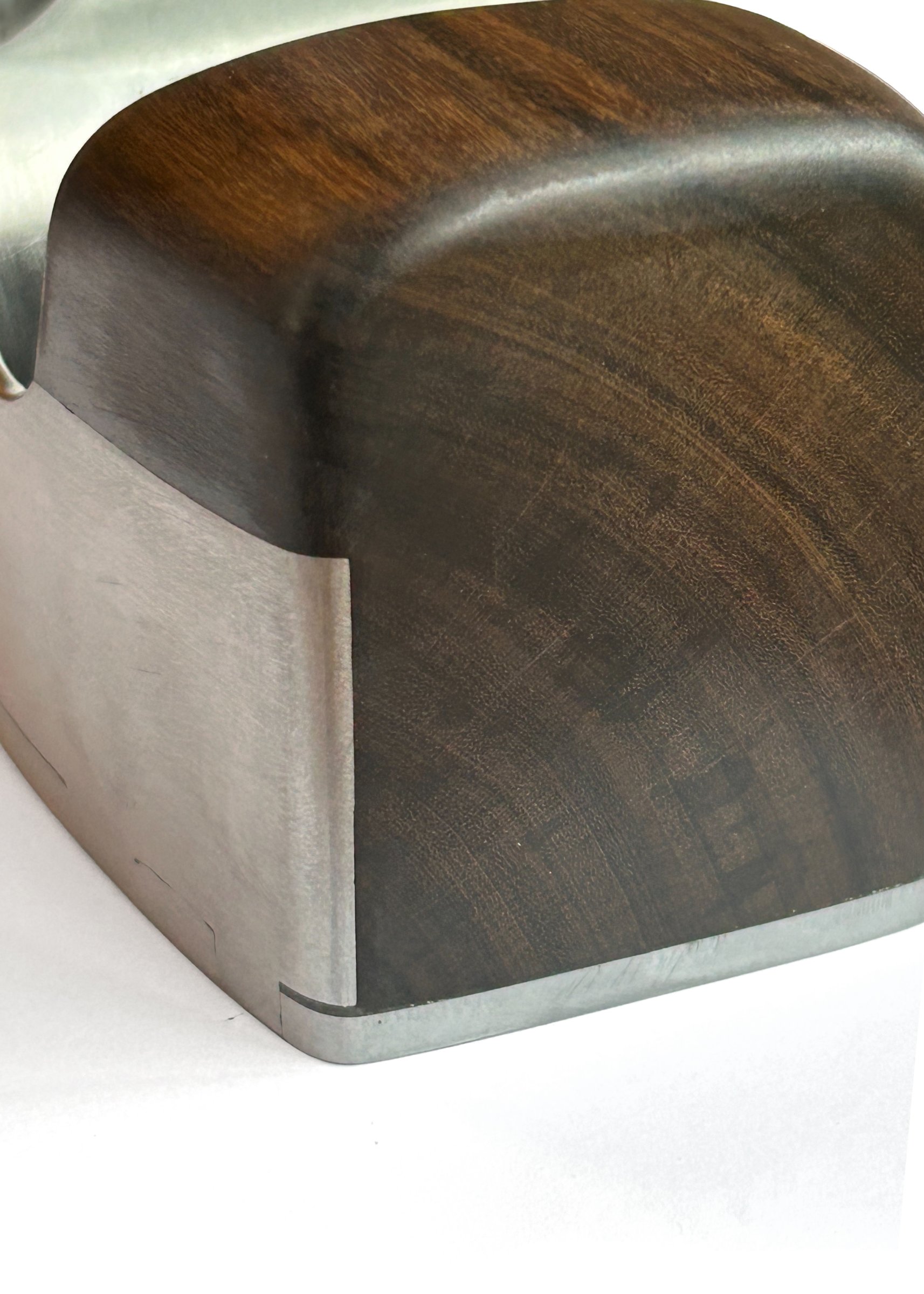
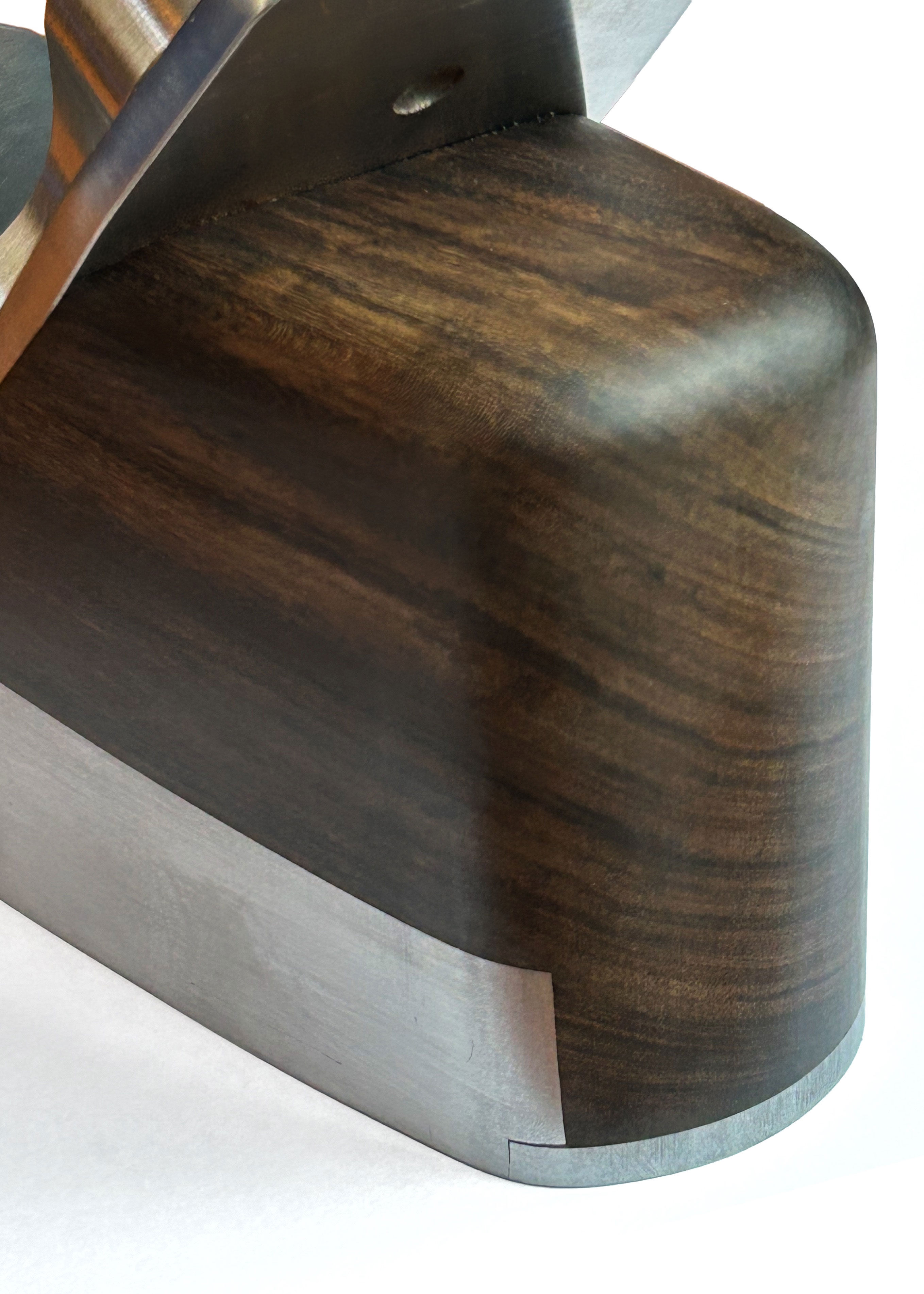
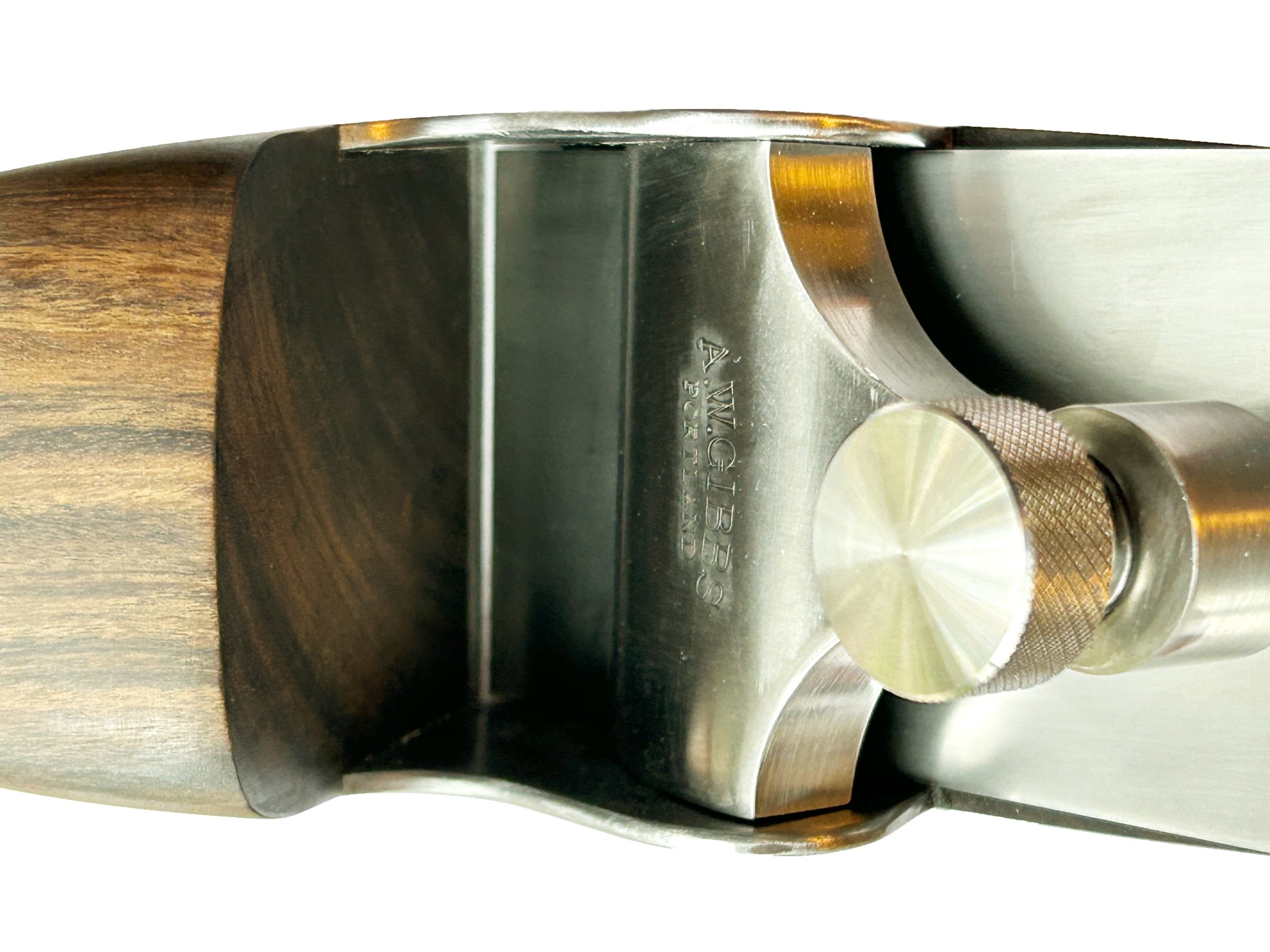
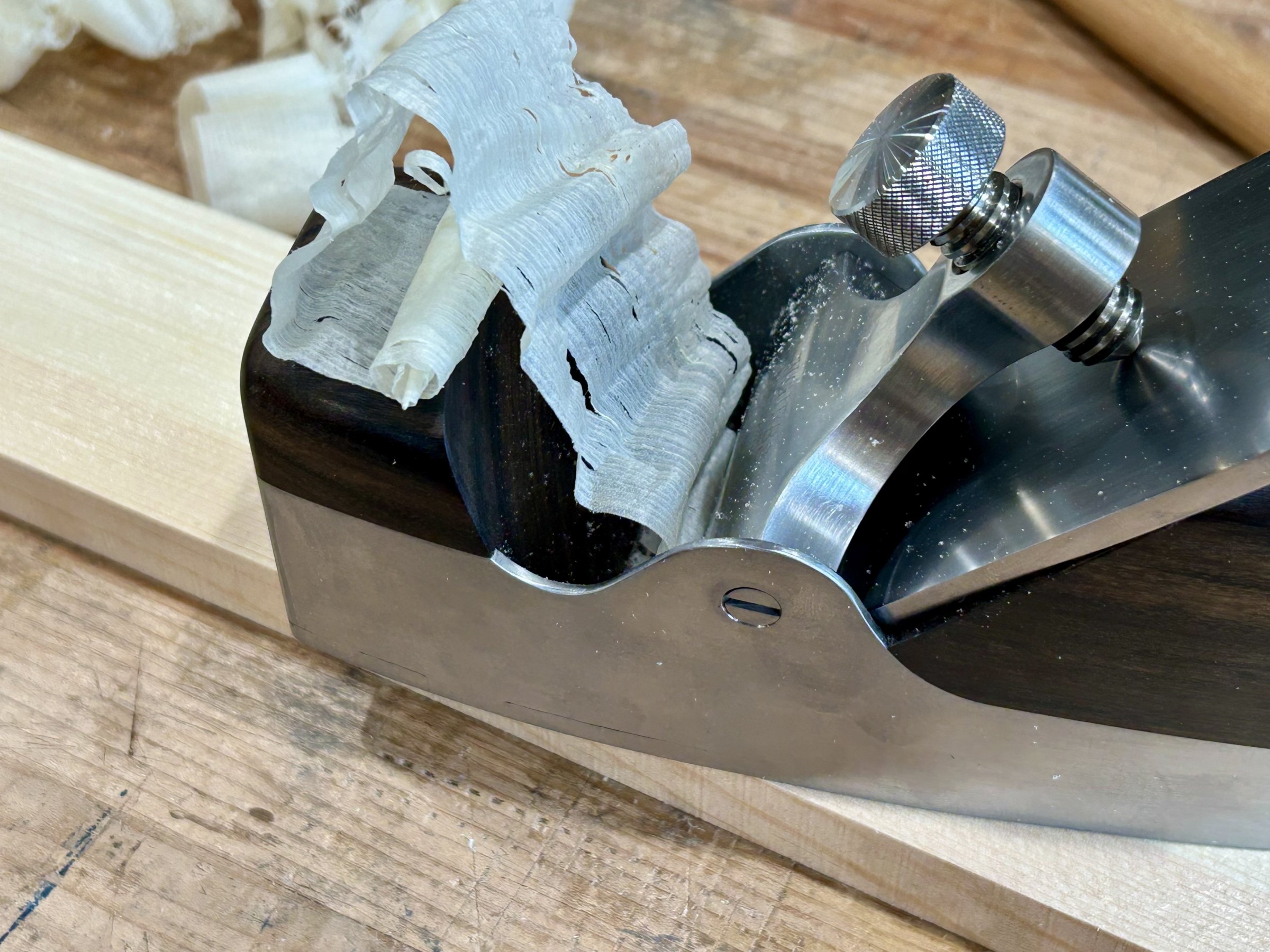
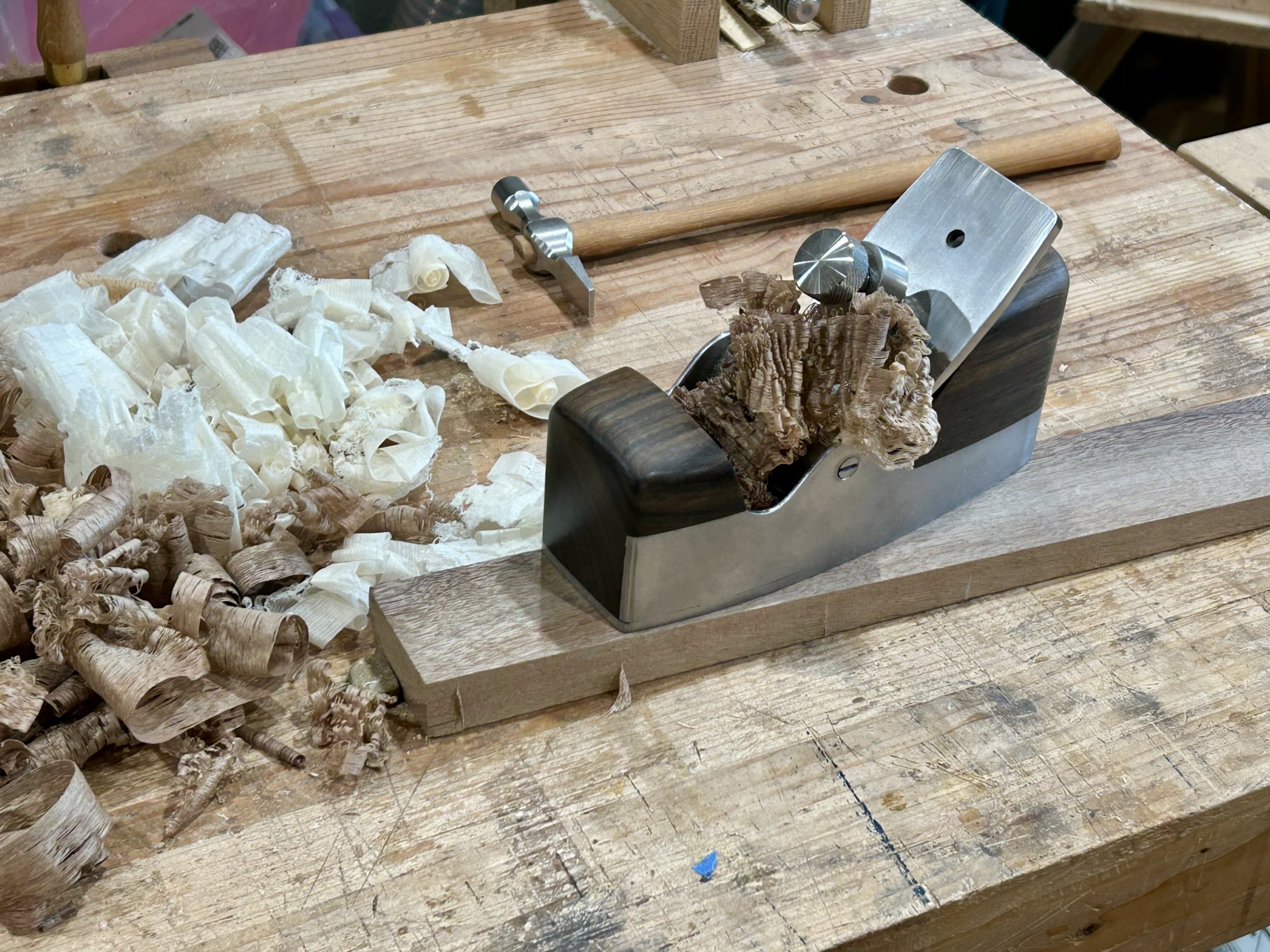
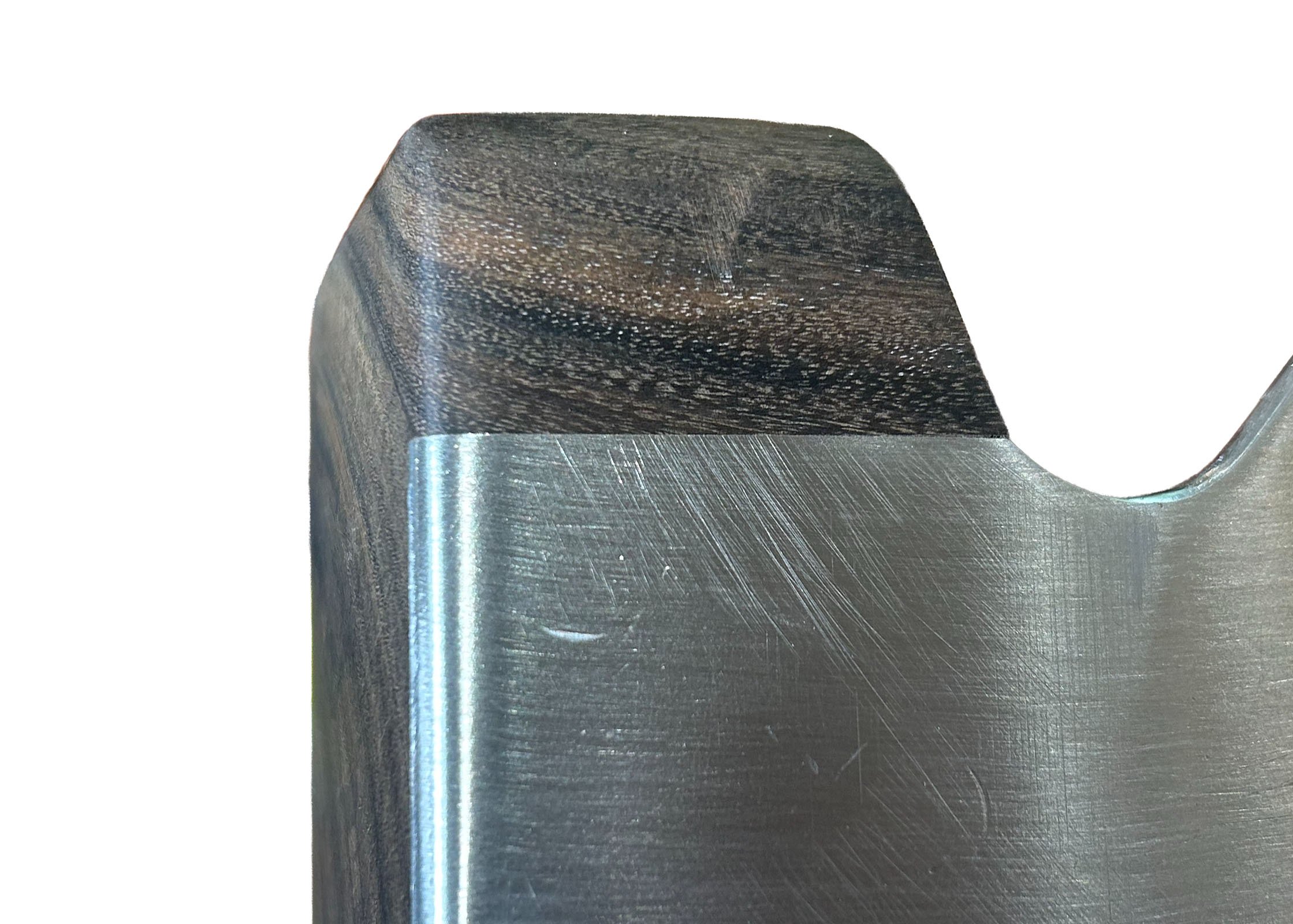
The curves that describe the joint between metal and wood for the rear infill, however, are another story. At my level of experience I can get very close, but there is very much a point of not only diminishing returns but a case of fix it here, making it worse there. So accepting a fit with some slight gaps is inevitable (for me). So how to address my need for that perfect fit like the front?
I've got three different techniques I'm using.
For hairline cracks either wholly within the wood (checking for example) or between the shell and infill, repeated applications of thick garnet shellac and sanding dust fills them up. The shellac I'm using started its life as a 2# cut, but has lived in the mason jar in my shop for many months alternatively having alcohol and flakes added to it. I don't know what it is now other than "visibly viscous." After each application of shellac dries, I sand it back to bare wood with 220 grit sandpaper. I then wipe off the sanding dust with my finger, or a cloth. The dust will remain in the cavity that I'm trying to fill if it's still there. I then apply shellac again over that remaining sanding dust and repeat the process. The dust is a combination of wood dust and shellac powder. The later will be reactivated by the subsequent application of fresh shellac and help bond everything together. On dark wood, as here, the patch is effectively invisible.
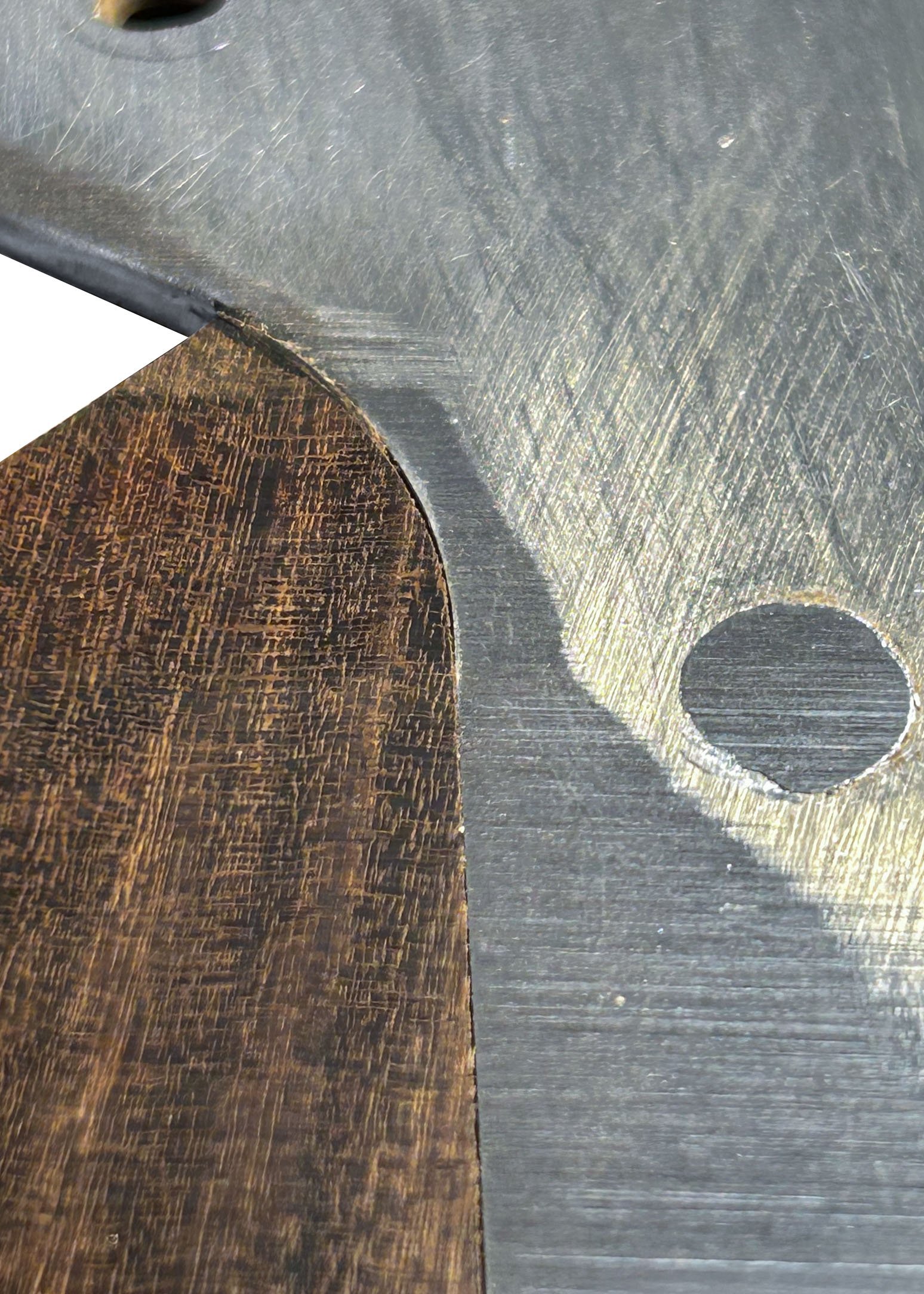
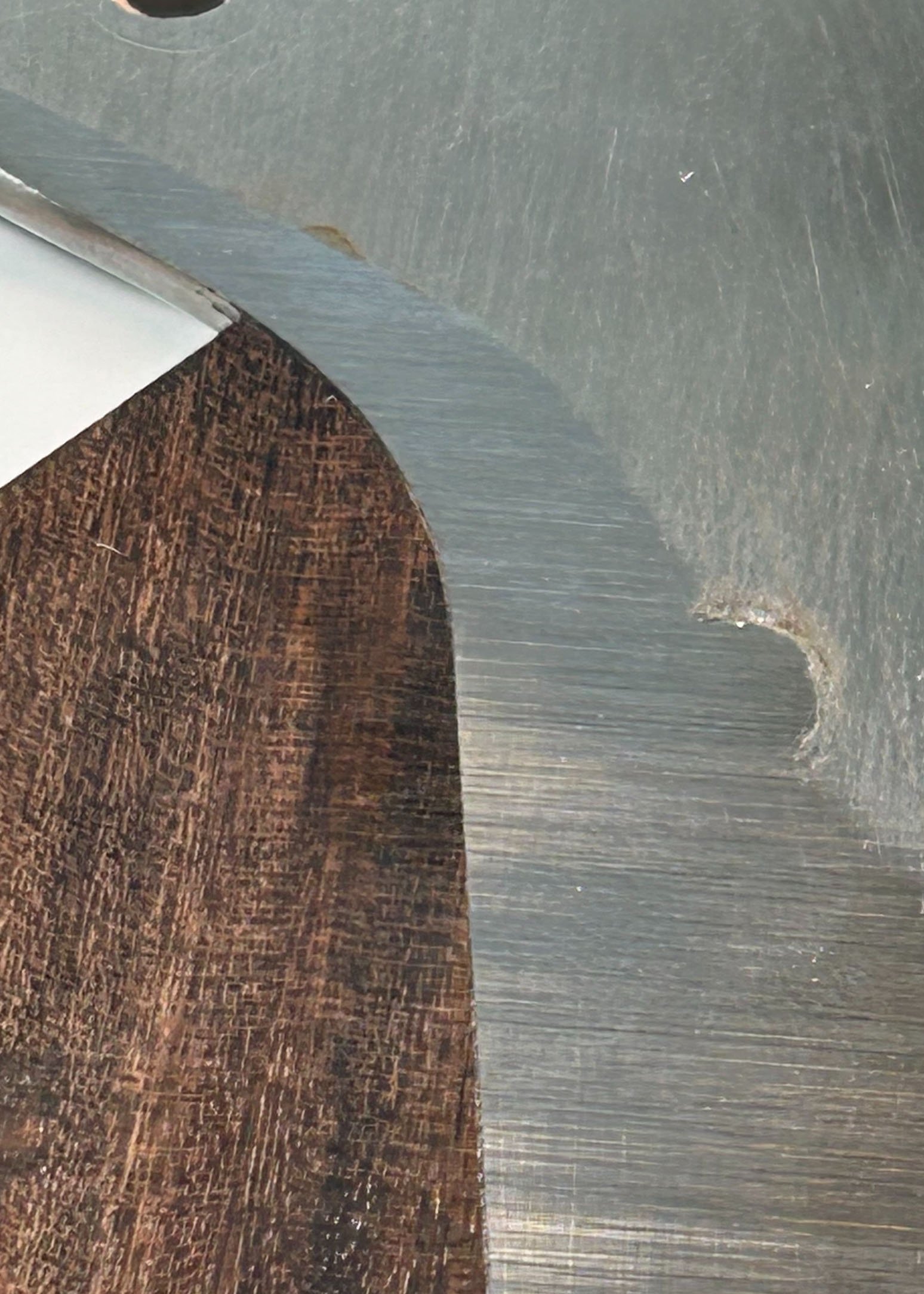
For small gaps (like this one where the bed meets the shoulder and the shell) I created a chisel shaving of the infill wood that could wedge into the gap, put loctite 380 on both sides, and wedged it in. Once this cured I flushed it off and, if hairline cracks remain, the sand-shellac-repeat technique above takes care of that.
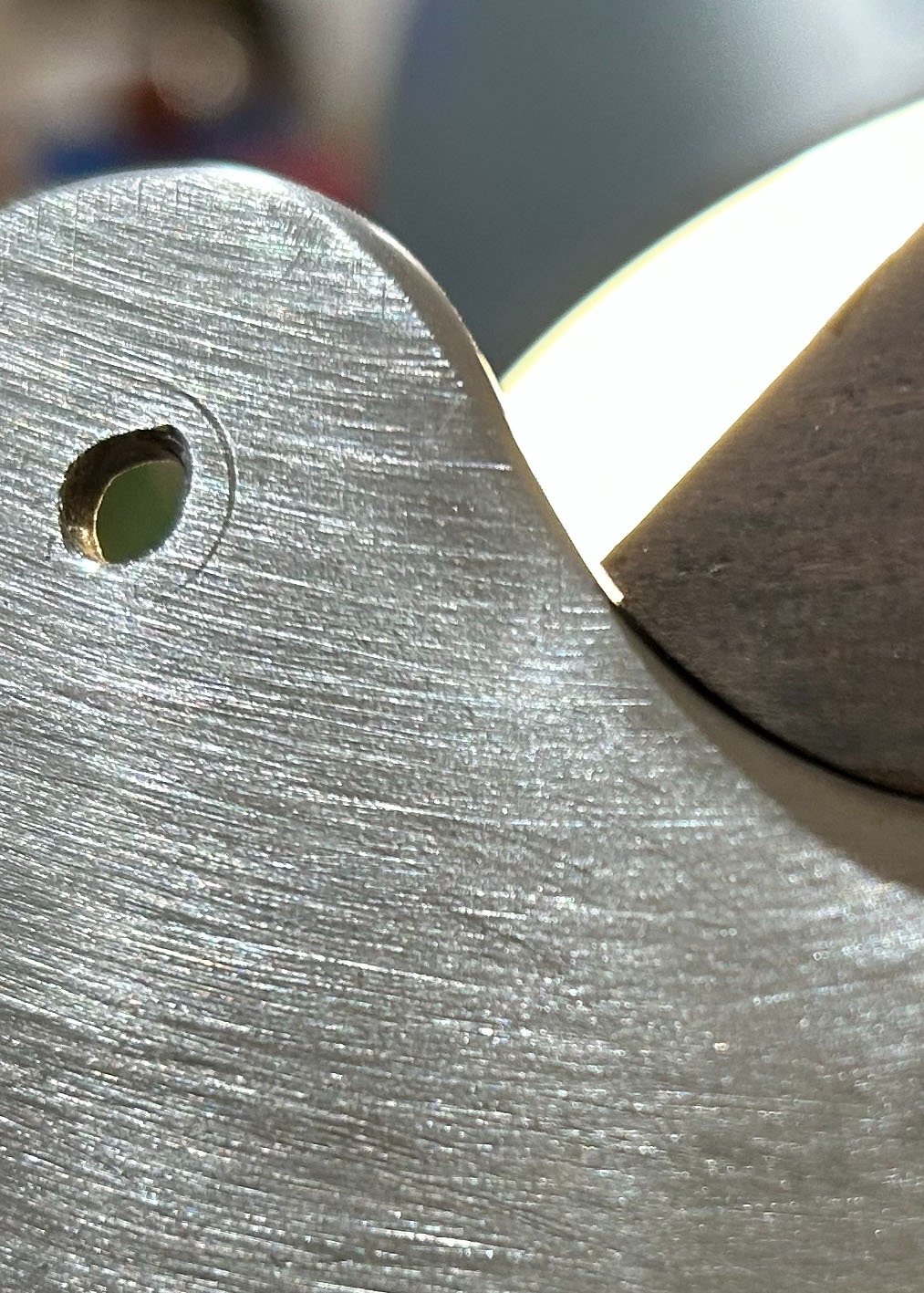
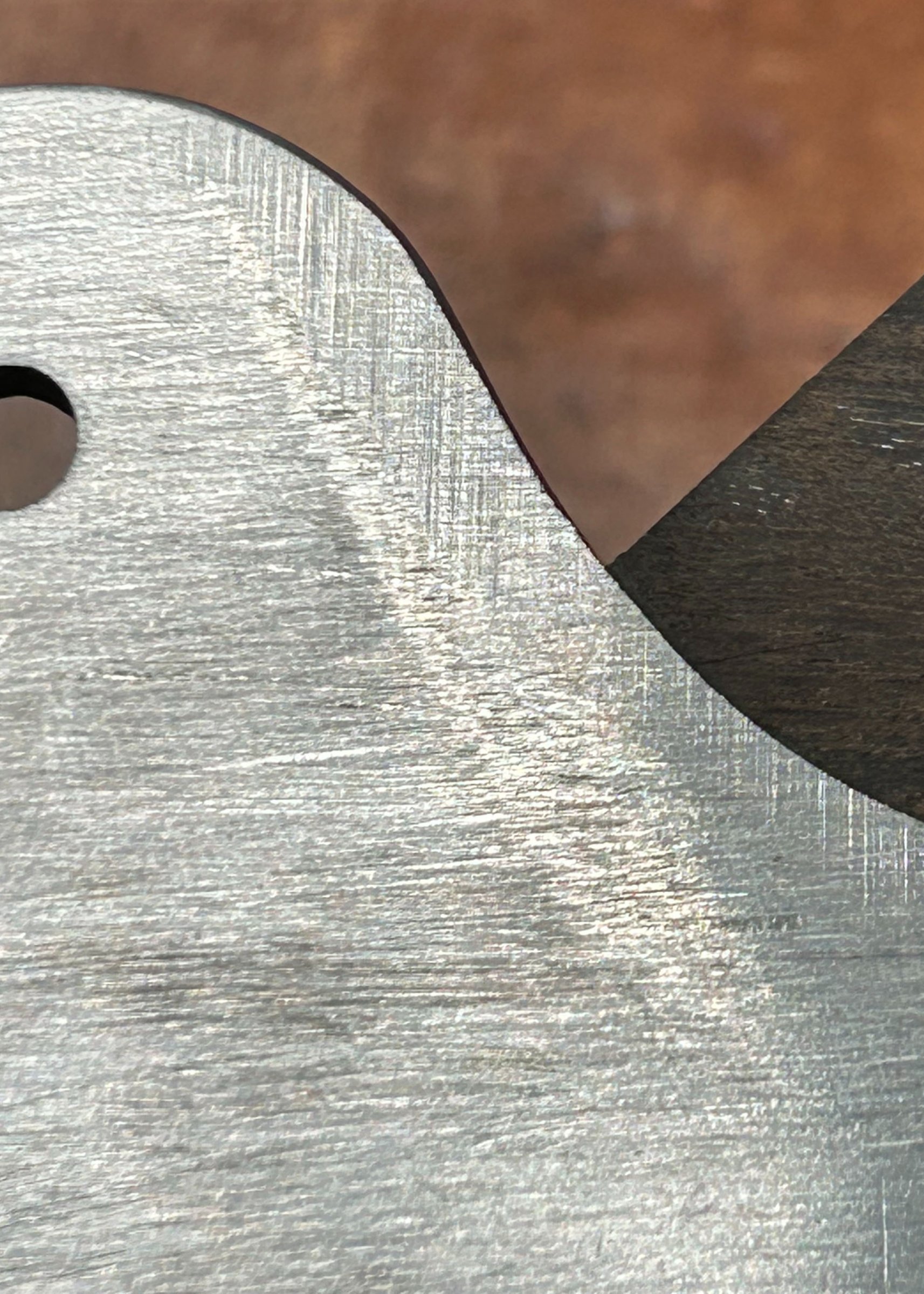
For the one large gap (I clearly got carried away with the float between checks... lesson learned) I used a wedge gently hammered into the gap. I used loctite 380 on both sides of the wedge. I made sure that the grain orientation on the wedge was the same (quartered) as the wood adjacent to the patch. After the glue sets the excess is fret sawn off and sanded flush. If small gaps remain, as they did here, the same sand-shellac-repeat technique described above is used to fill them. It's not invisible, and never would be given the size of the patch, but it's as good as can be under the circumstances. The surface is completely even, the chatoyance is correct, and the grain is only slightly mismatched.
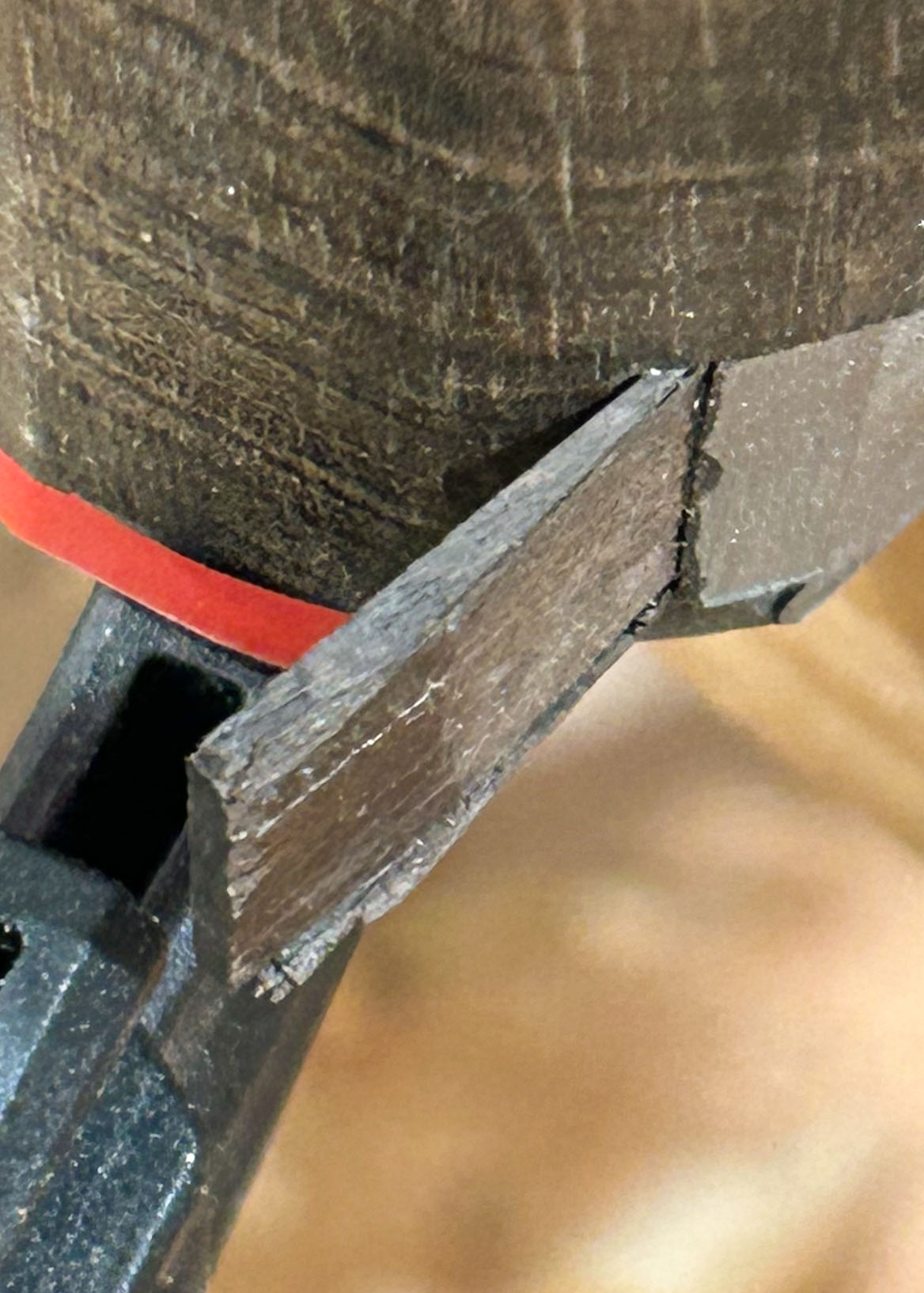
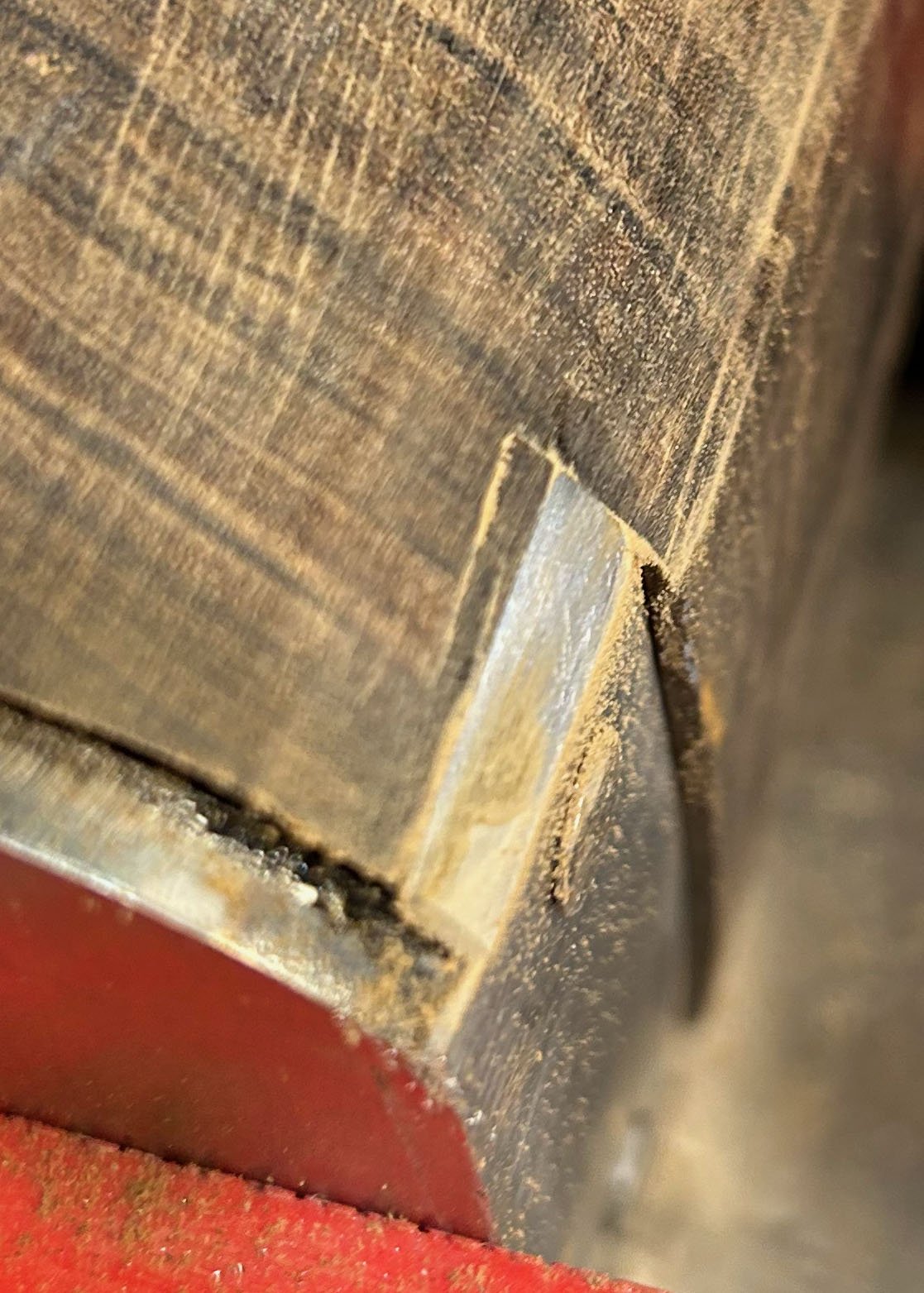
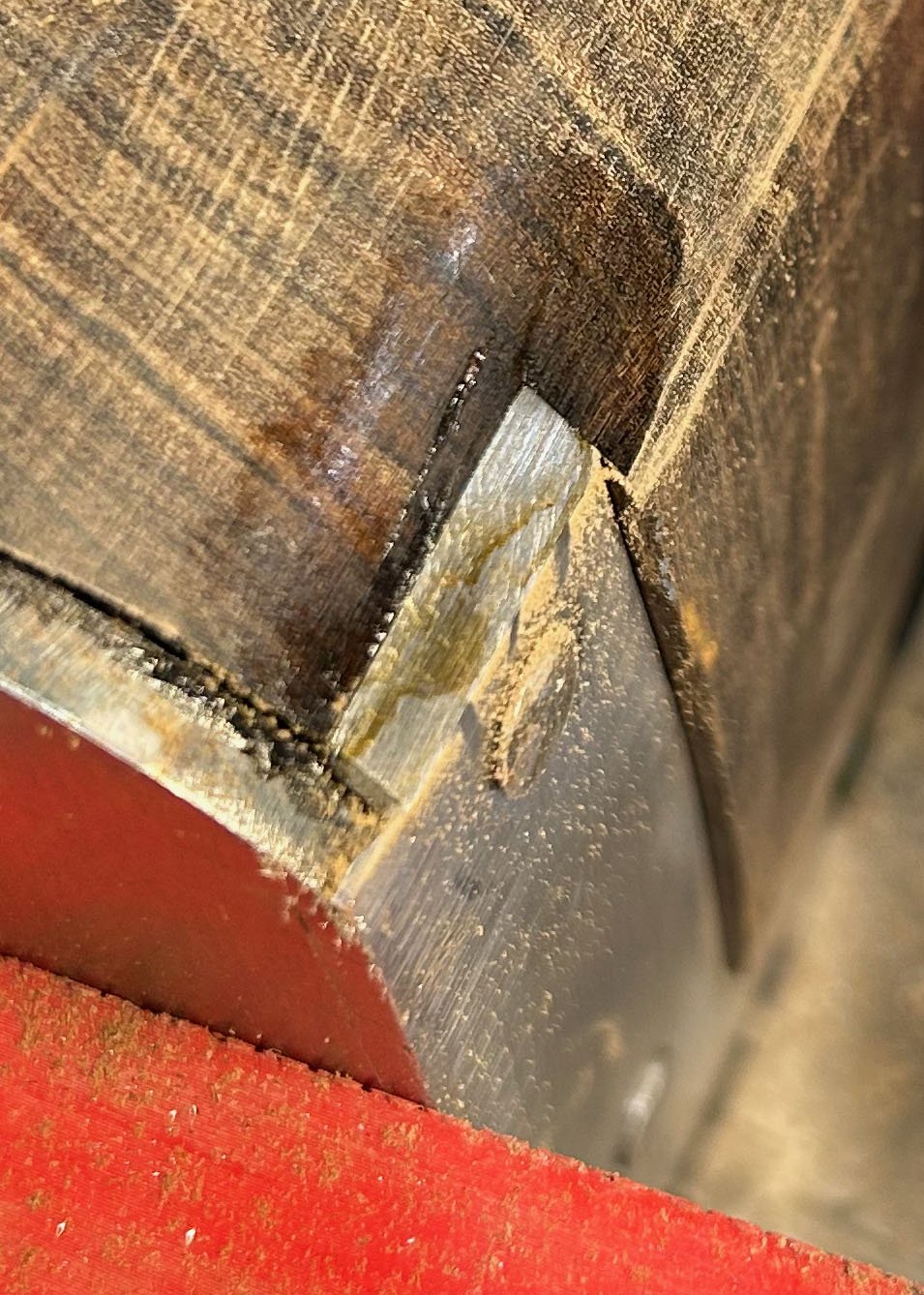
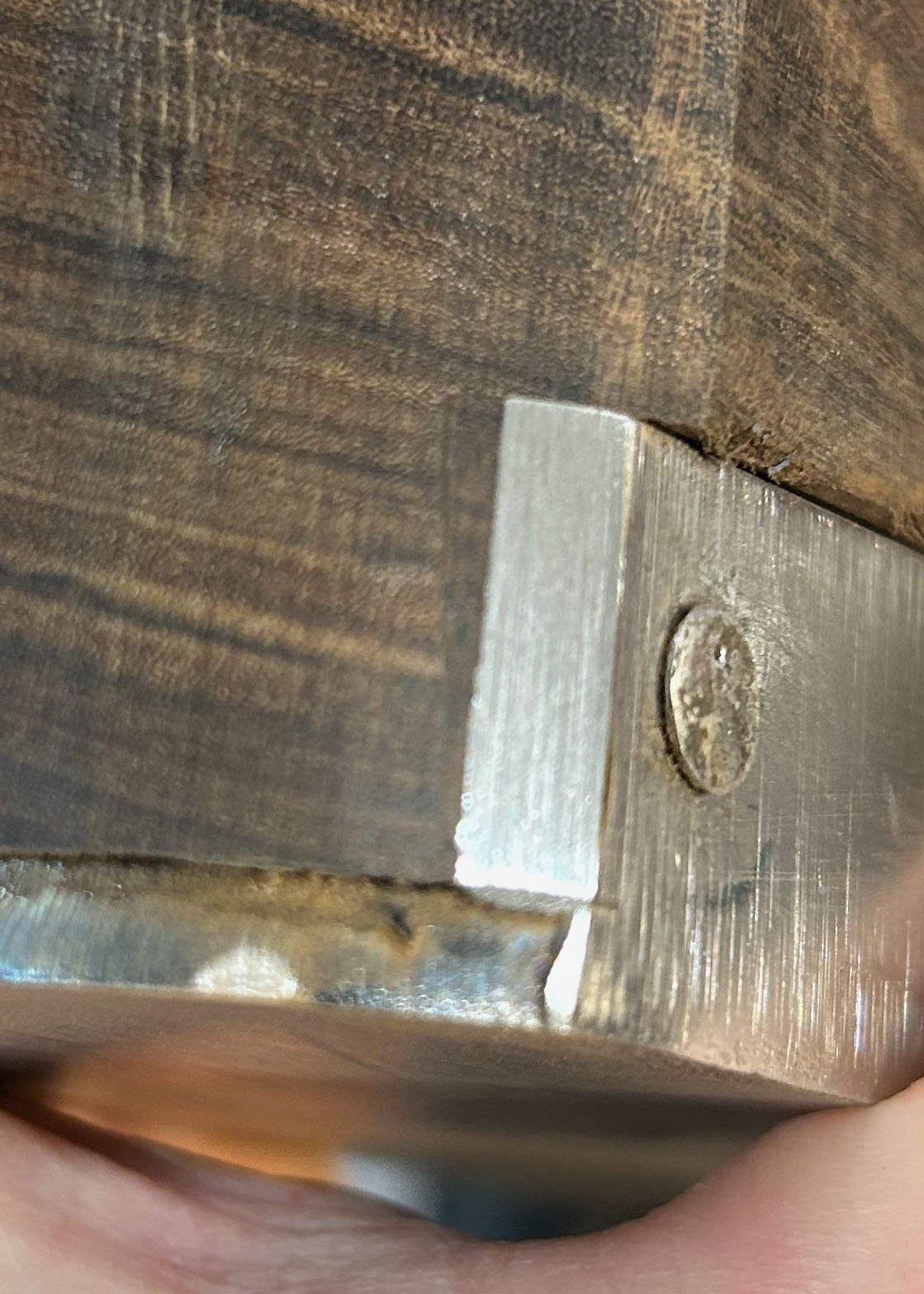
I waited until now to lap the sole so that I could do it under the same stresses the plane will see in actual use. With the lever cap installed and tensioned, the shell is behaving exactly as it will when the plane is working. I also wanted to do this before applying any finished surfaces to the outside of the infills, since lapping inevitably throws fine metal powder everywhere—and I’d rather not grind that into finished wood.
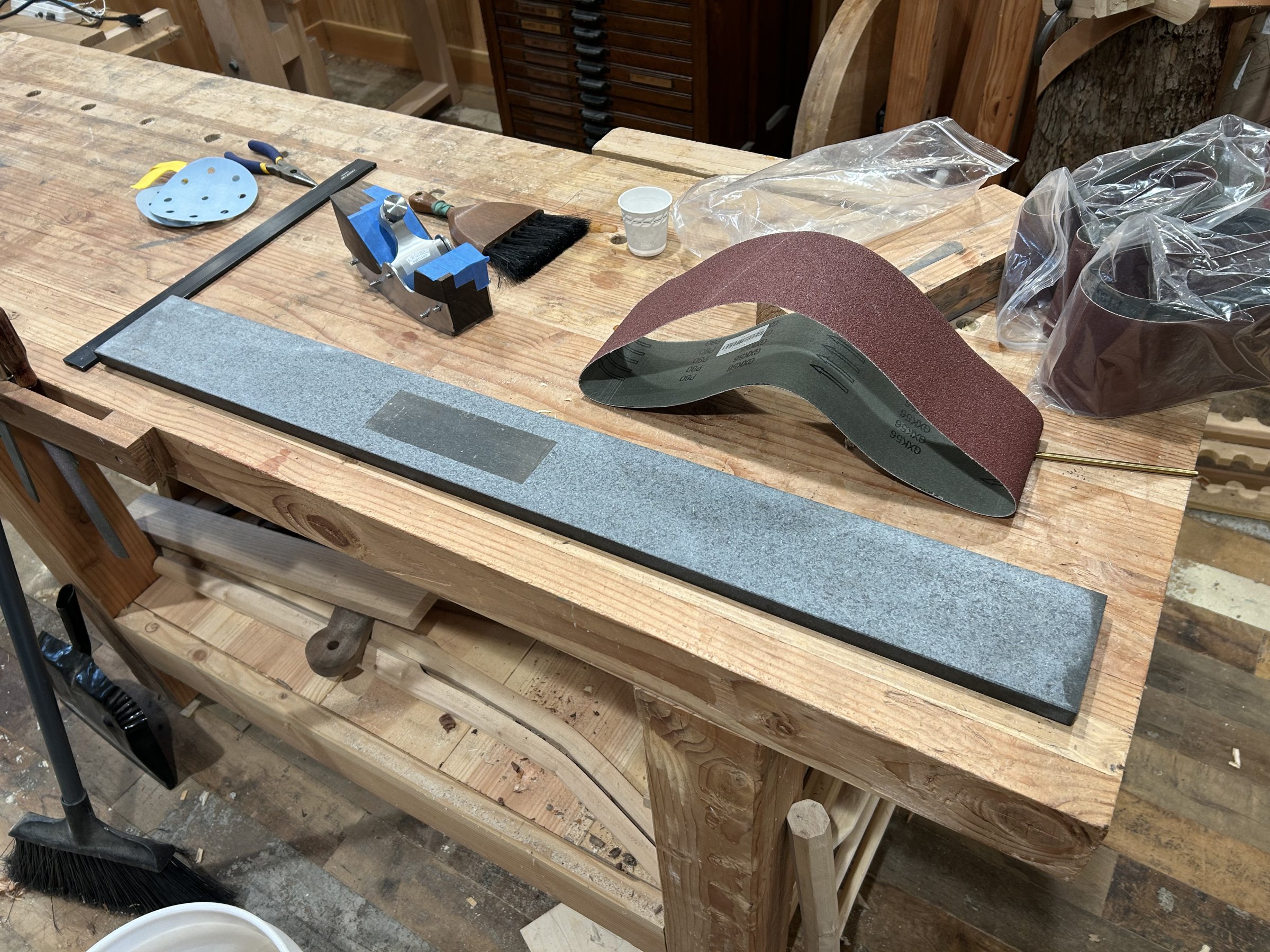
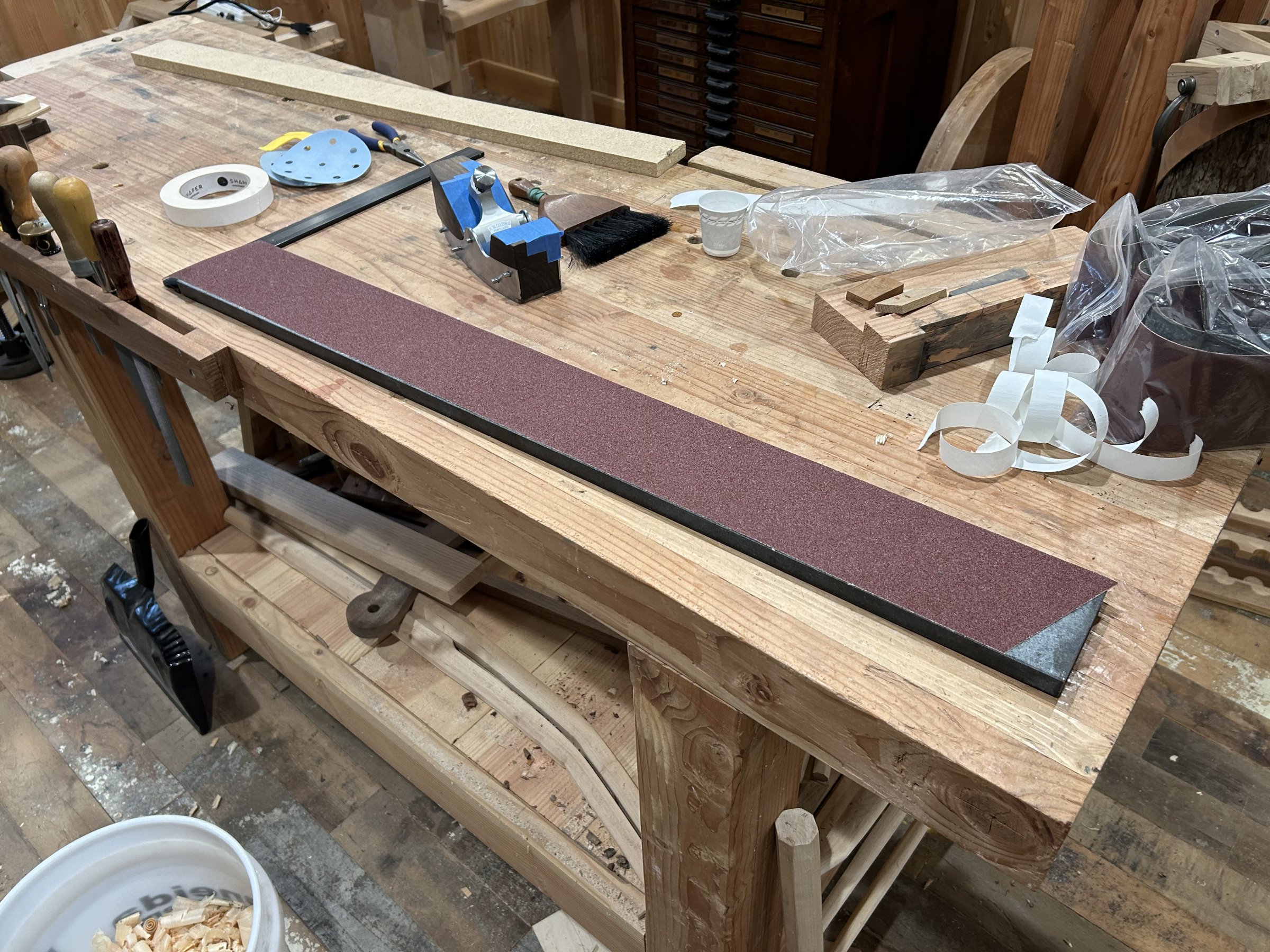
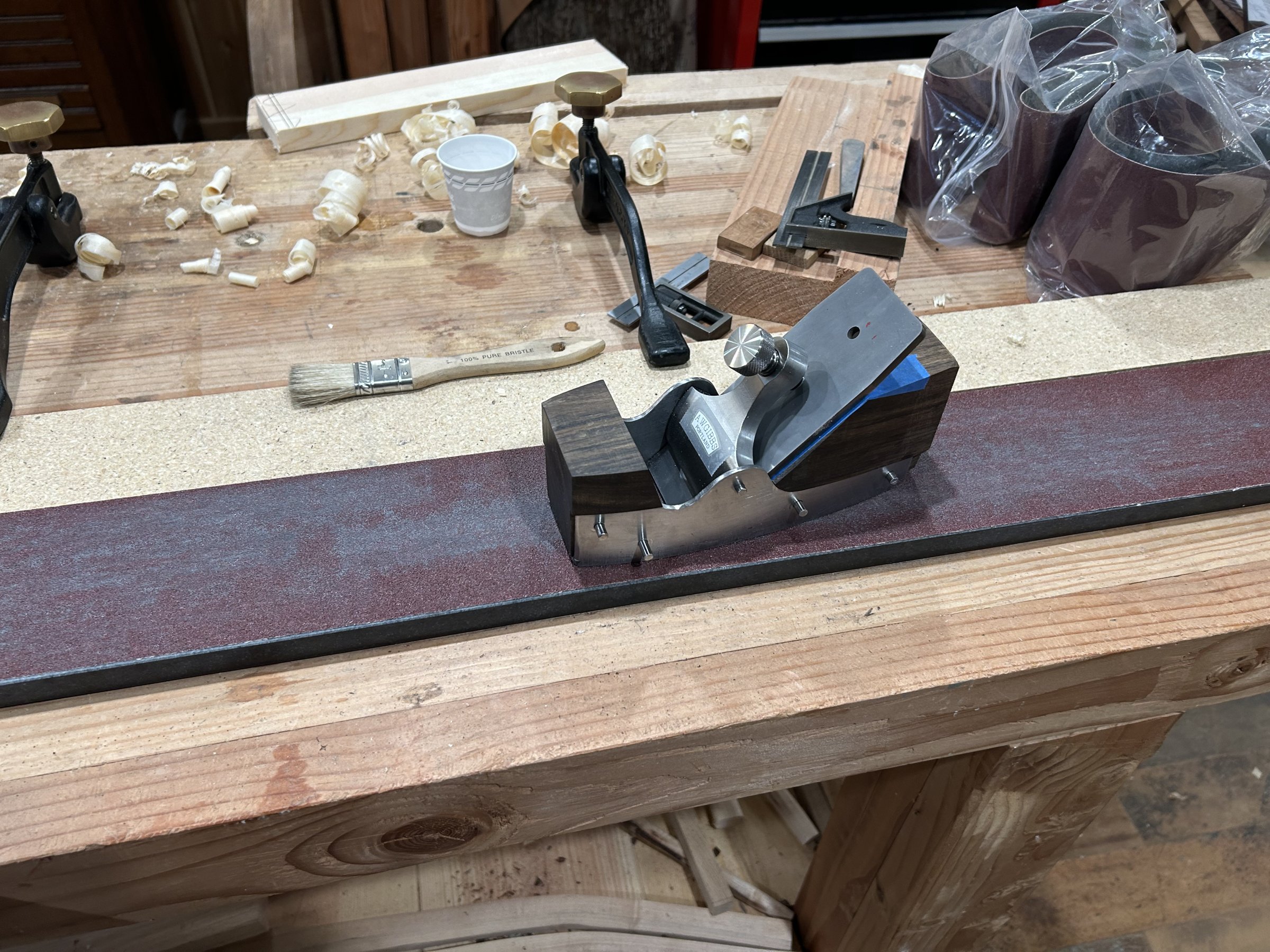
For the lapping surface, I used an inverted granite threshold from Home Depot, paired with a split belt from a 4×36 belt grinder. The belt lays flat, stays put with generous use of double stick tape, and provides a nice working length. After about an hour on 80-grit, the sole is coming along nicely.
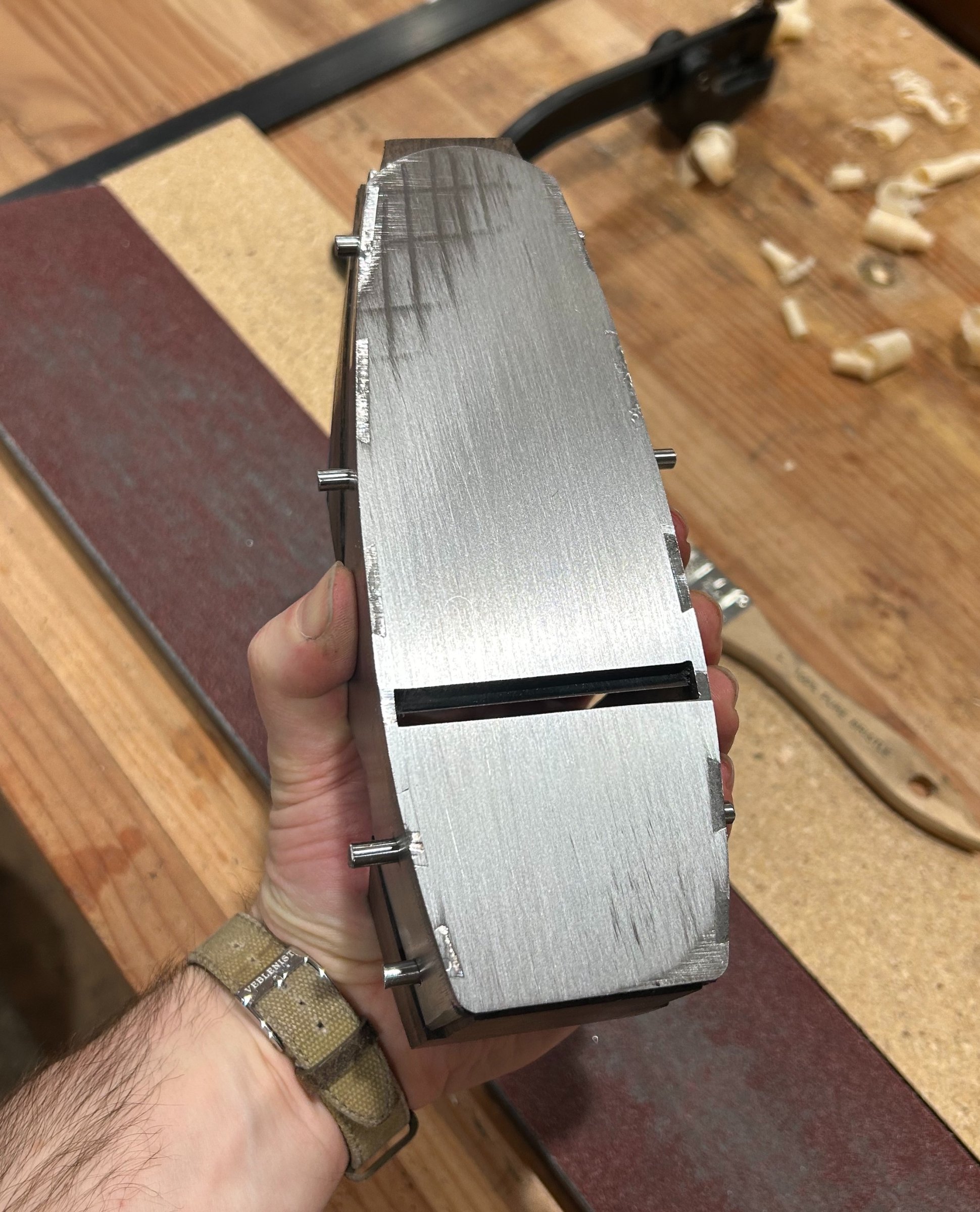
As always, lapping is a study in diminishing returns. When the sole is significantly out of flat, progress comes quickly and visibly. But the closer you get to true, the longer it takes to make meaningful change. I have 120- and 180-grit belts ready to go, but those will be quick passes once the geometry is established. The real work is here on the coarse belt, patiently bringing everything into the same plane.
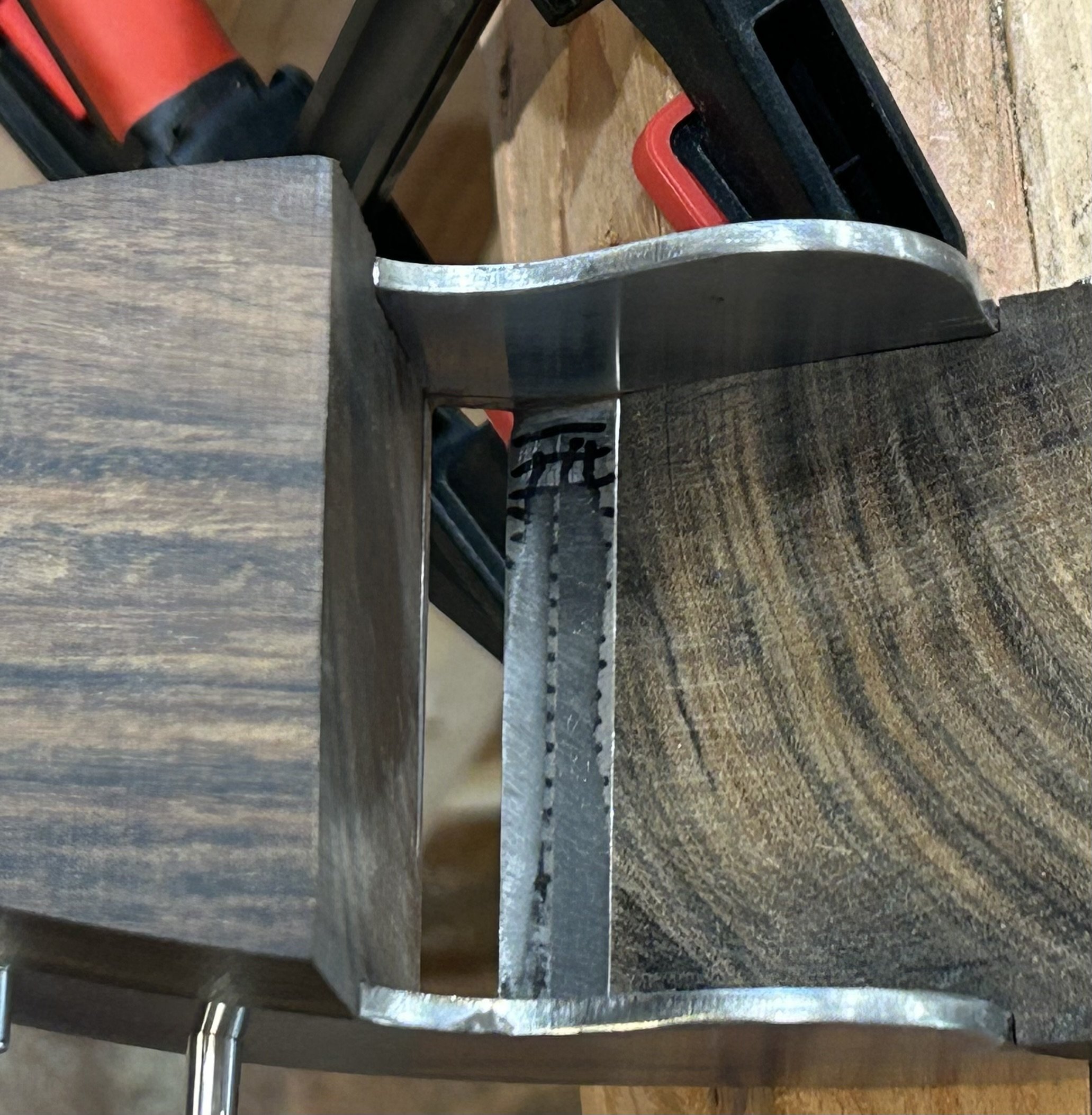
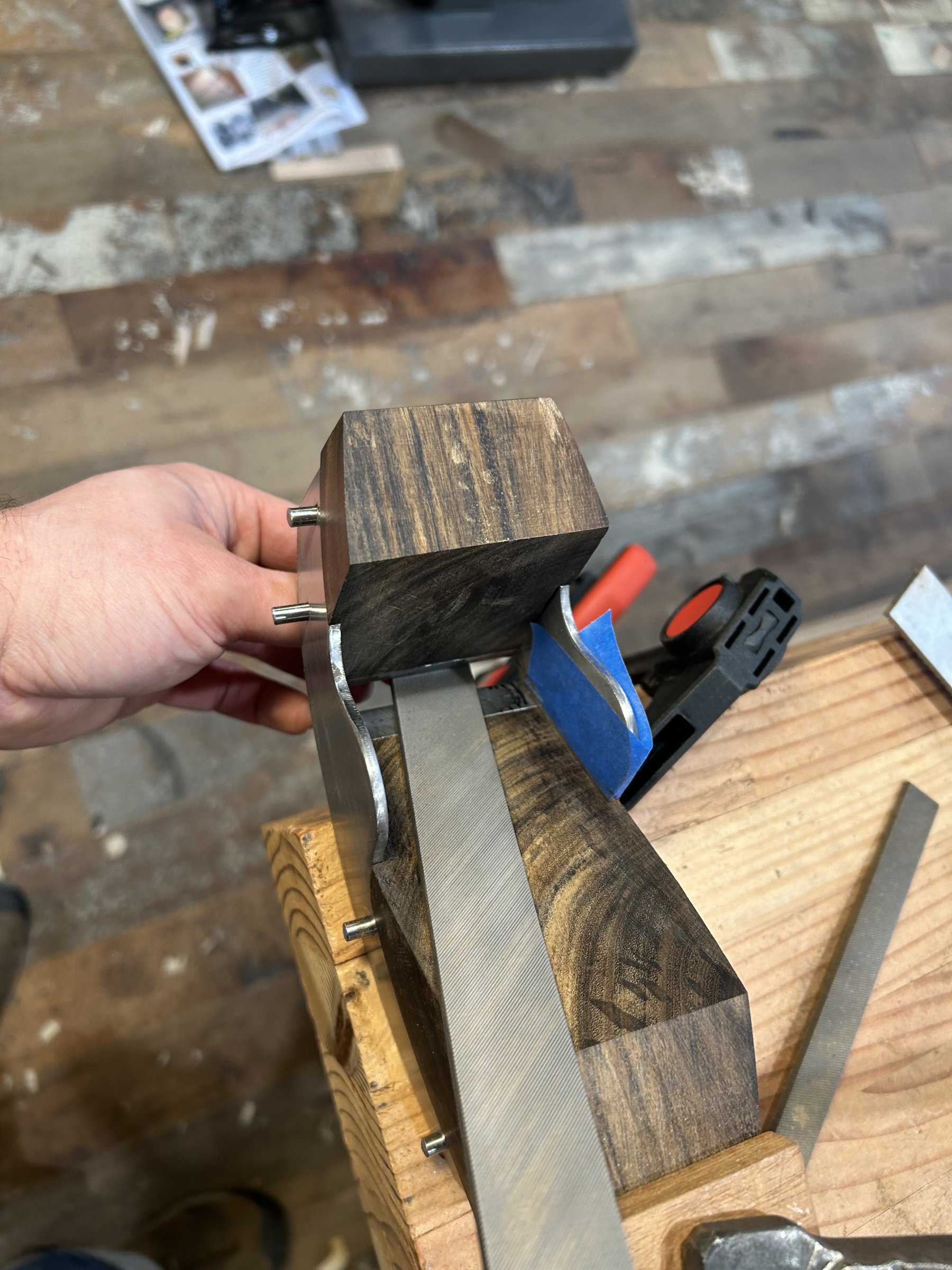
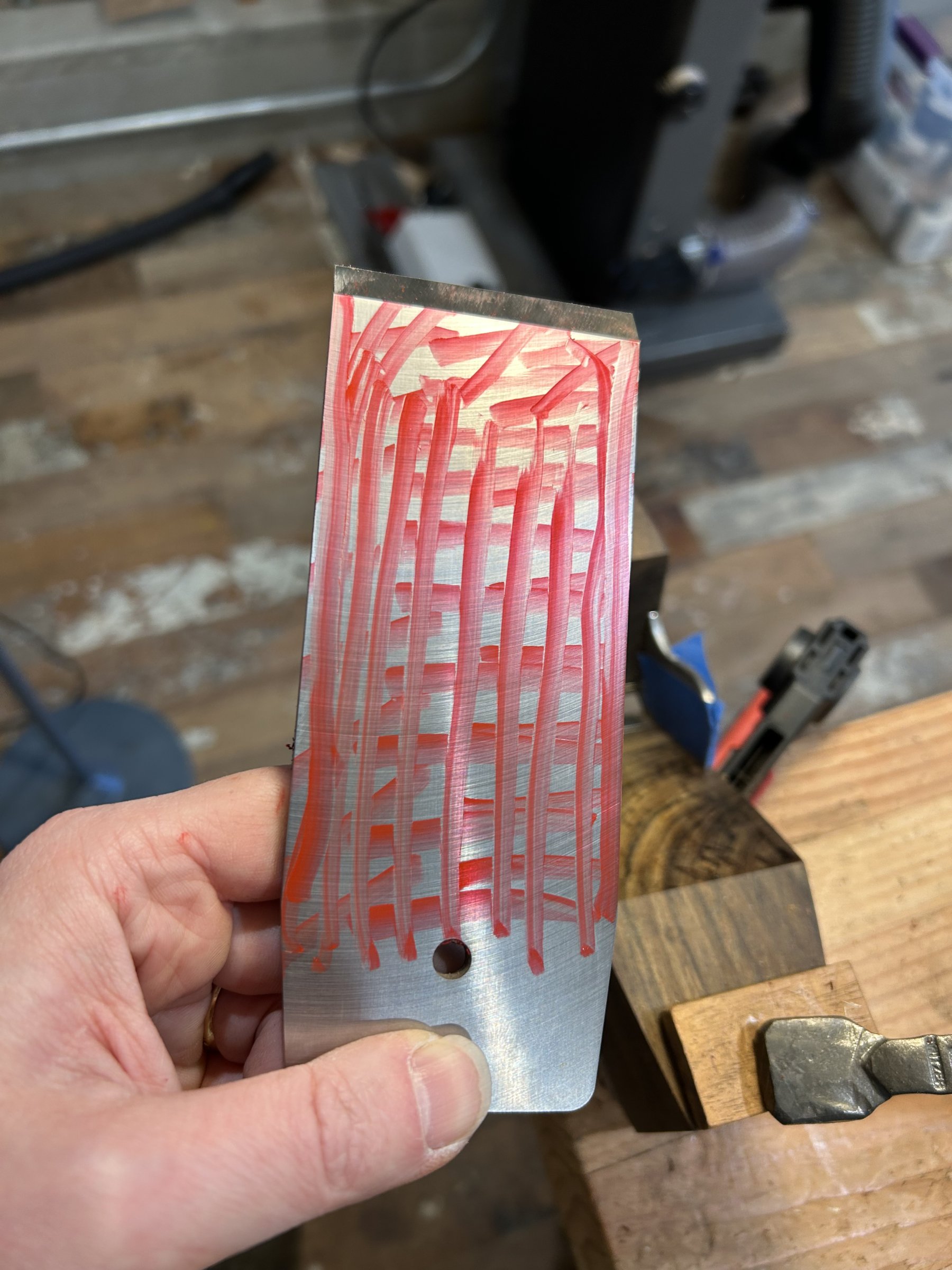
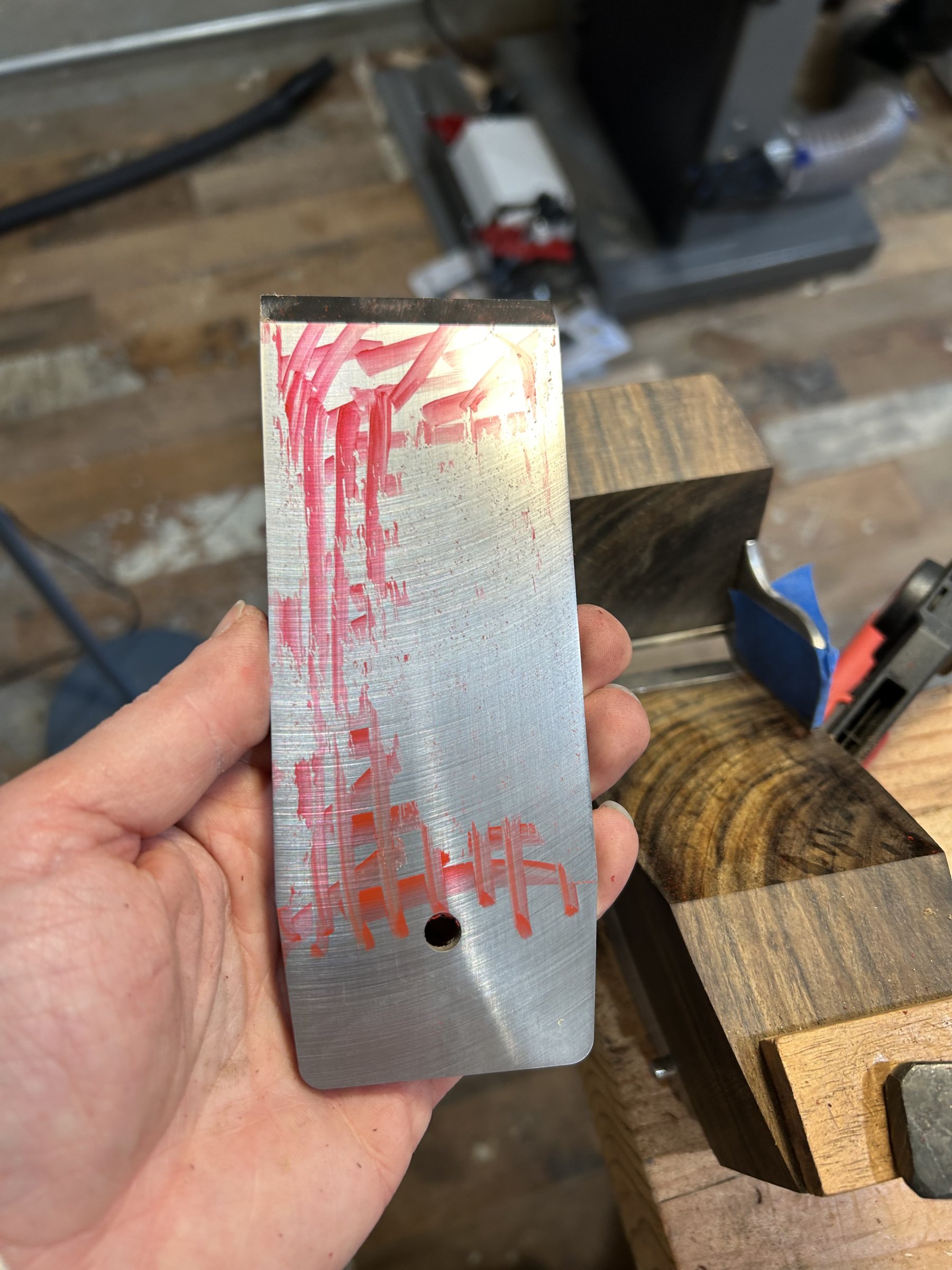
With the infills now temporarily pinned in place I turned to one of the most consequential internal operations on the plane: bringing the wooden bed into perfect continuity with the steel at the mouth. This step is not about appearance, with the blade in place none of this work will be visible. Any bump, hollow, or discontinuity here will telegraph directly into blade support, so the goal is a single, uninterrupted bearing surface from the rear of the bed through the mouth. That's the theory anyway, in reality getting 70% of the surface co-planar will be a win. I used dry erase marker on the iron itself to read contact, working slowly and deliberately to remove only the high spots in the wood. The process is highly repetitive: each pass shows not just where material needs to come off, but how the bed and shell are relating to one another as an assembled system.
What I was looking for was consistency rather than speed. Uniform contact across the width of the iron and right up to the mouth, without biasing the shell or closing the mouth even slightly. This is one of those operations where progress is measured in feel and witness marks rather than visible change, and it rewards restraint. I'm aiming for ~70% of the surface to bear with a preference for the surfaces immediately around the mouth. I'm getting there, probably 40-50% right now, but with the gaps that exist near the mouth. I did some testing with feeler gauges, and it's about a .002 gap right now between the metal at the mouth and the back of the blade.
Once I get that gap closed, the remaining interior steel can be brought up to final finish, after which the infills will be permanently locked in place.
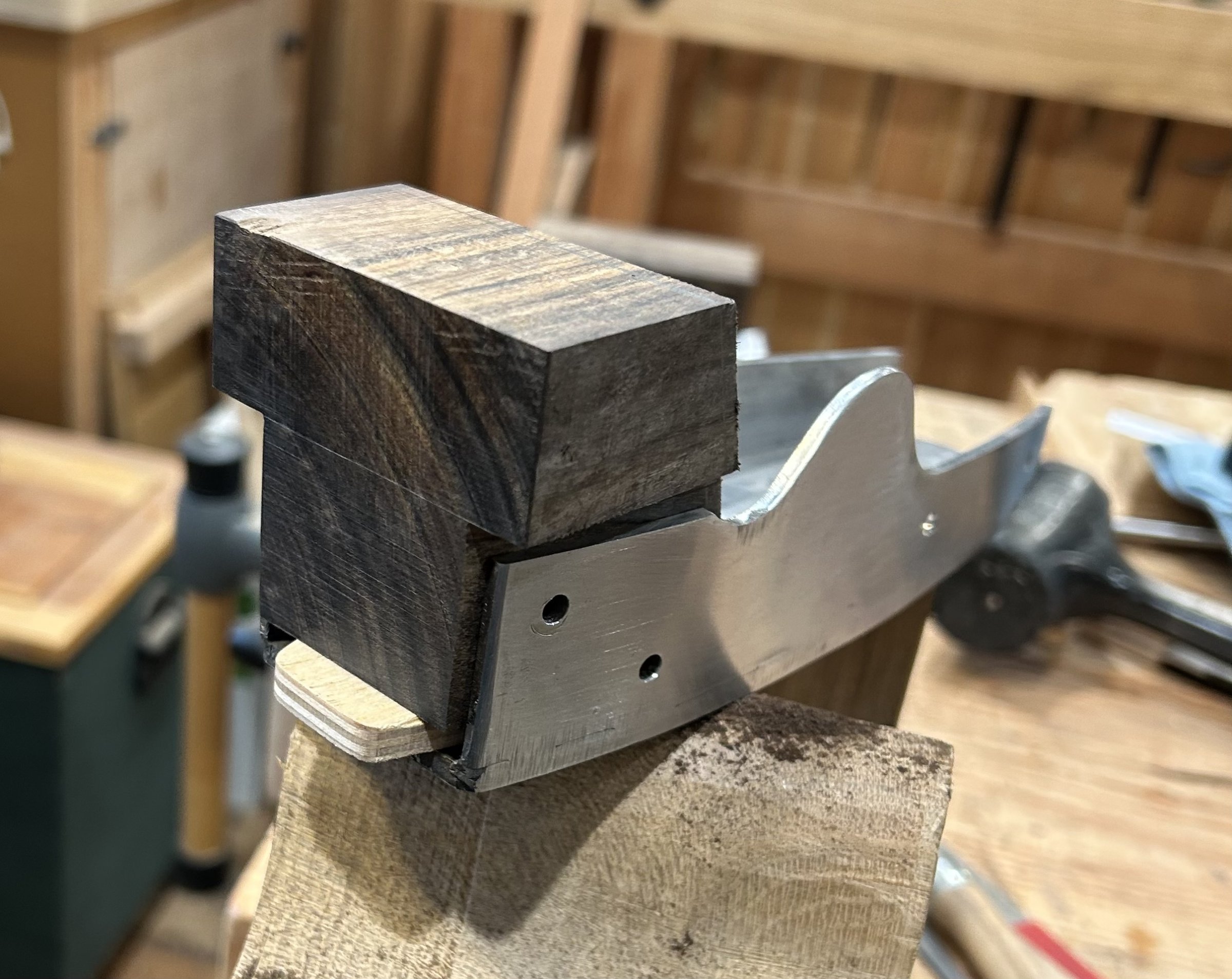
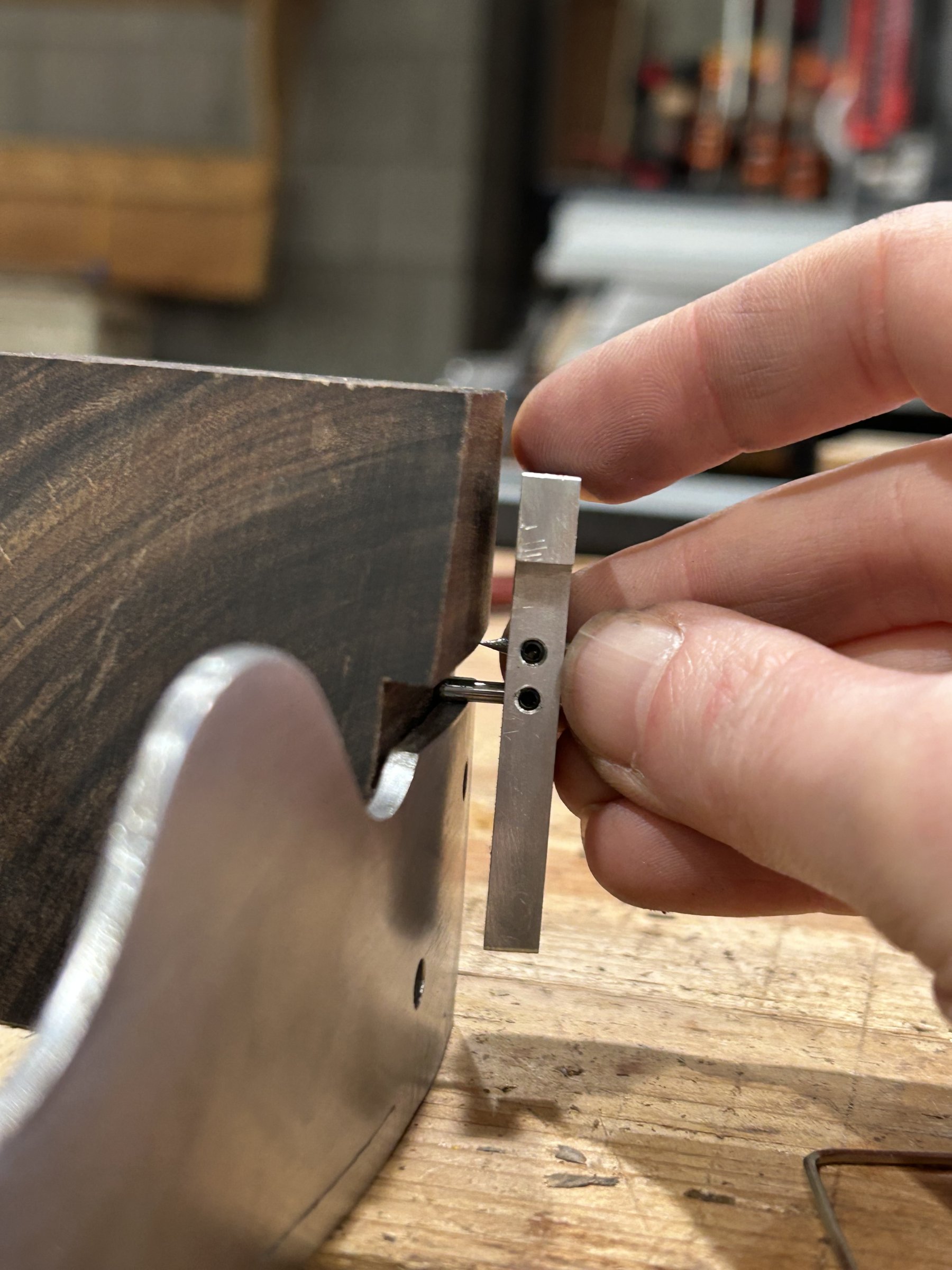
Fitting the infills to the shell is a slow methodical process. I determined the best way to get a clean shoulder line for the fit between the wood and the metal was to shim and scribe. That is, a know thickness spacer (0.250" in this case) is placed on top of the sole and then the stuffing is shaped until it firmly registers on that shim. At that point a purpose-made scribe that puts a line exactly .250" above a reference edge is used to mark the shoulder. After that it's a simple matter of removing the material right up to that line.
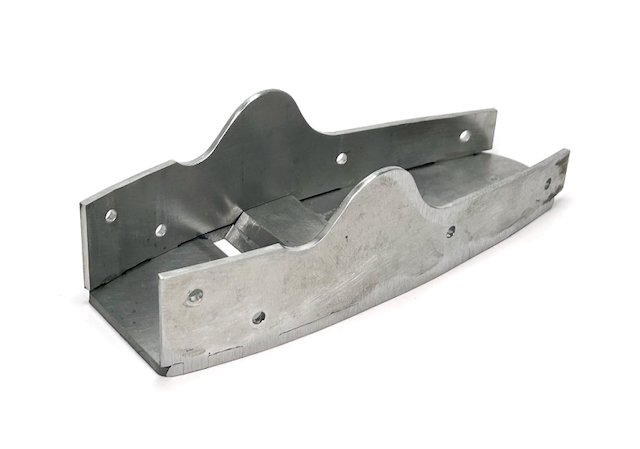
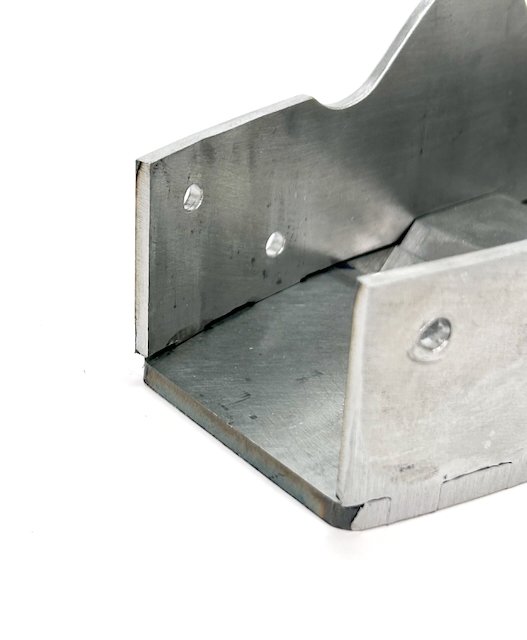
Having now fully peened the shell I am realizing some challenges of the design choice I made for how to structure the dovetails. The traditional "double dovetail" is what I've seen on most modern makers' planes as well as read about. However, examining the antique example, the tails coming off of the sides were visually straight. So I replicated that in this plane. The end result, likely due to my inexperience, was that the peening process lifted the toe end of the sides off of the sole as the metal pushed it up. If I'd been able to peen the ends of the tails on the sides first, it would have locked it in place and prevented that from happening, but a combination of the design and not leaving enough meat on those parts prevented doing that. I will redesign the side for future planes. Fortunately, the sides are structurally locked in; reasonably application of force doesn't result in any movement. So I will fill the gaps with some Devcon 10110 and move on.
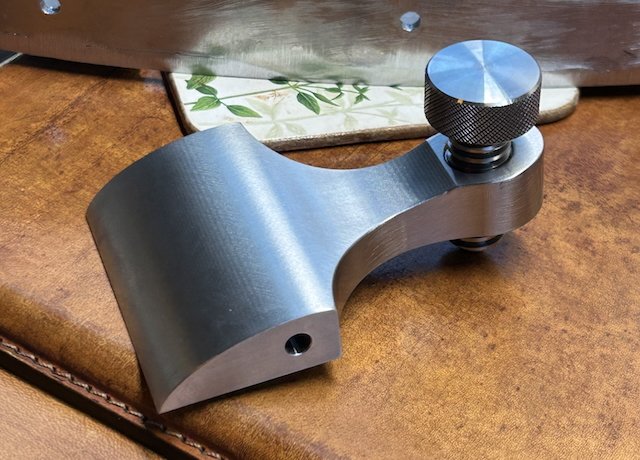
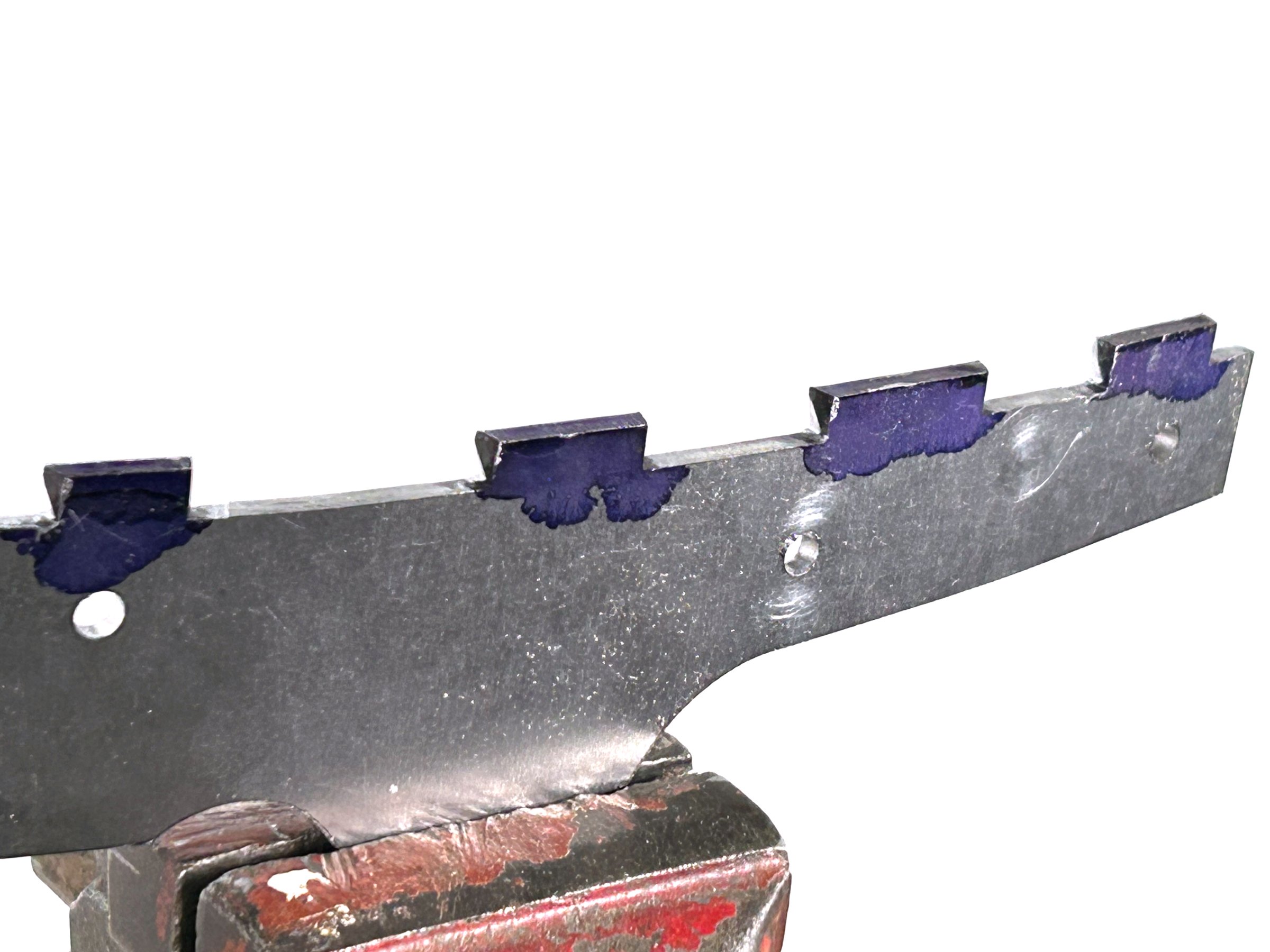
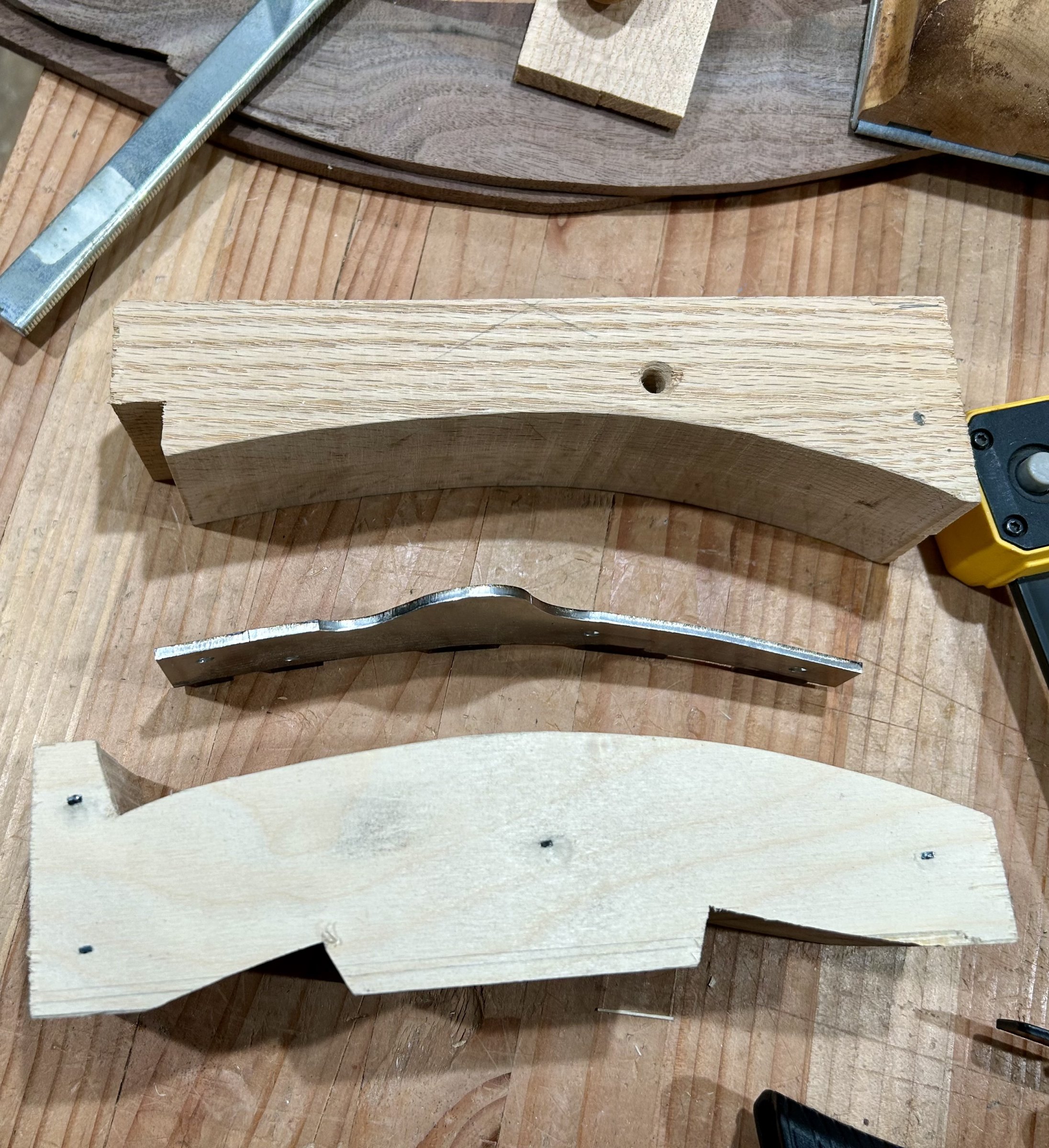
Using a two-part bending form I can fairly quickly bend the sides to shape using the force of a vise or clamps to bring the sides together. Anticipating the spring-back and shaping the form accordingly is much trickier. On this plane I managed to get the sides close off the form and then used various combinations of a makeshift anvil (1.5" metal rod stock), a baby sledge, and squeeze clamps to adjust the curve until it was close enough to the curve of the sole. Once it was close, it was painstaking work with the file to file off the high spots in each dovetail socket, test the fit, mark the new high spots, file them off, over and over until the fit was where I wanted it. My shop log shows that as about 4 hours of work, though it felt like a lot longer.
A few more hours of filing got me: undercuts for the metal to flow into during peening, a mouth roughly angled where I want it, and a mouth extended out to meet the sidewalls. I get the feeling there is a lot of technique to develop here that would improve speed and accuracy on future planes. For now, I'm just glad to put my files down and move on.
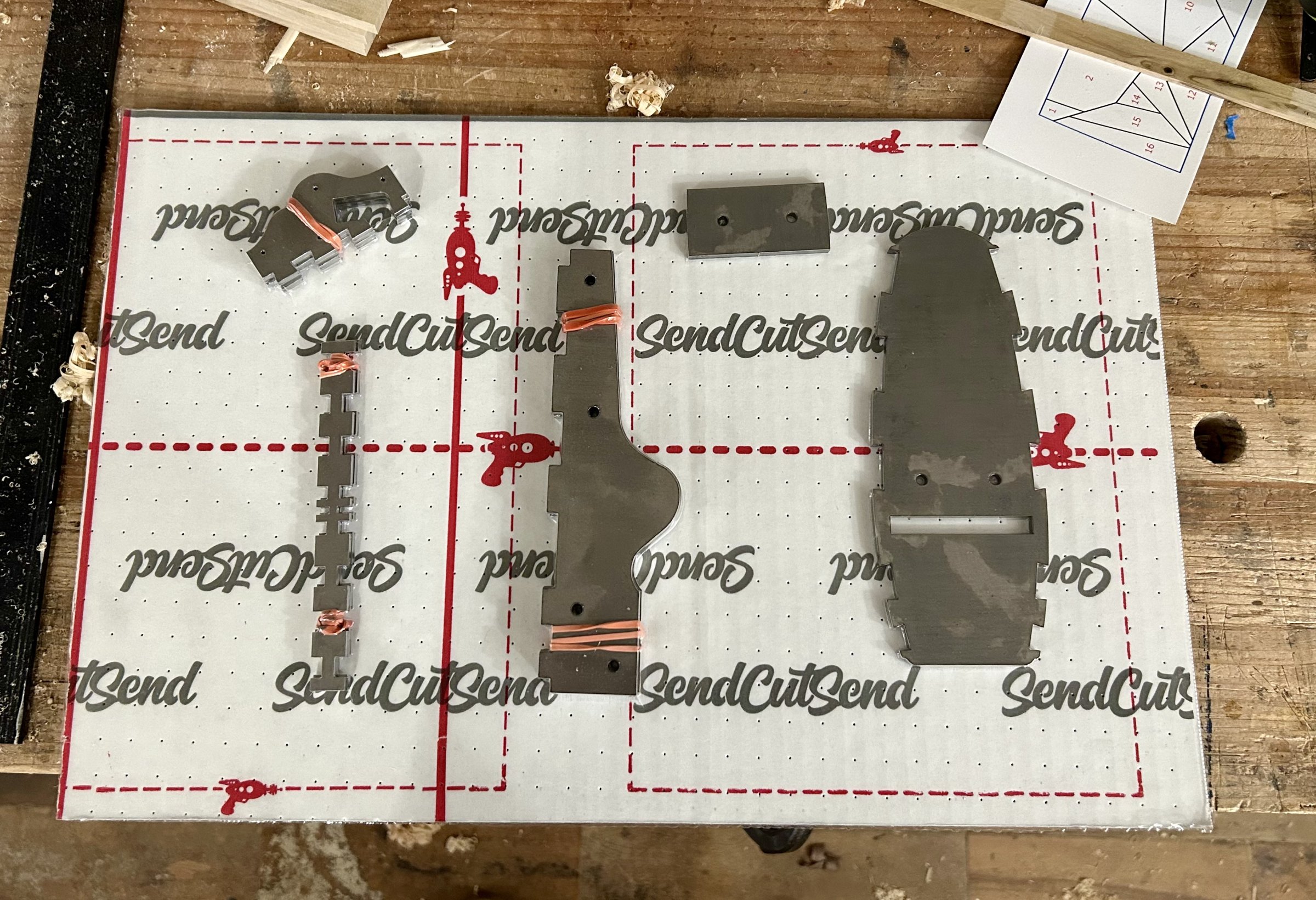
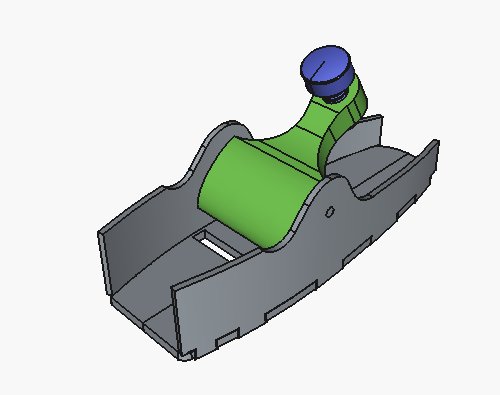
I'm stepping up to a full-sized plane for my next effort. This will be modeled closely on an old Spiers infill smoother in my collection. Many hours went into closely measuring the plane and modeling the metal parts in CAD so I could outsource rough cutting of the metal to a laser to jump start my process. This will be all steel. Mild steel for the dovetailed components, stainless for the lever cap and screw. I haven't decided on a stuffing wood yet, but will go shopping once I have a shell made.
The dovetail pattern on the Spiers smoothers in my collection is a bit different from the one I executed on my last plane and what I've seen on modern two-metal dovetailed planes. That is, looking at the plane fro the side it looks straight, like a box joint, rather than showing the characteristic dovetail outline. Since it's supposed to blend in to the side when the metals are the same for the side and sole, it shouldn't matter aesthetically. It shouldn't be any harder to execute, and I'll see if it saves any time when it comes to the peening.
The first challenge, however, will be bending the metal for the sides, which means making up a bending form.